
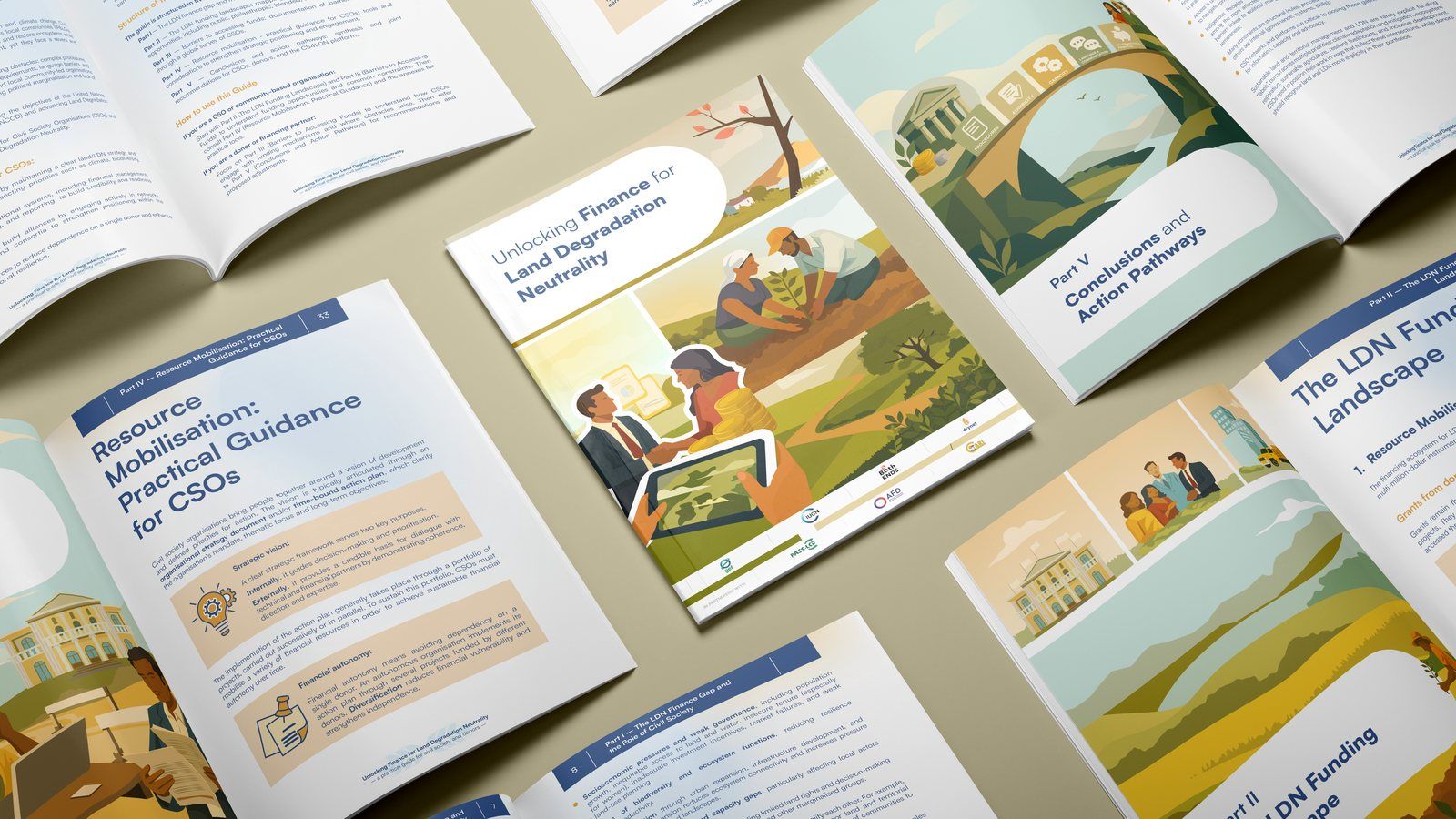
An illustrated publication and campaign about the gap between the people restoring land and the finance they need.
- ClientInternational Union for Conservation of Nature
- WorkEditorial, translation, illustration, publication design, campaign strategy, animation and paid social
- Timeframe2026
- StatusPublished
The work
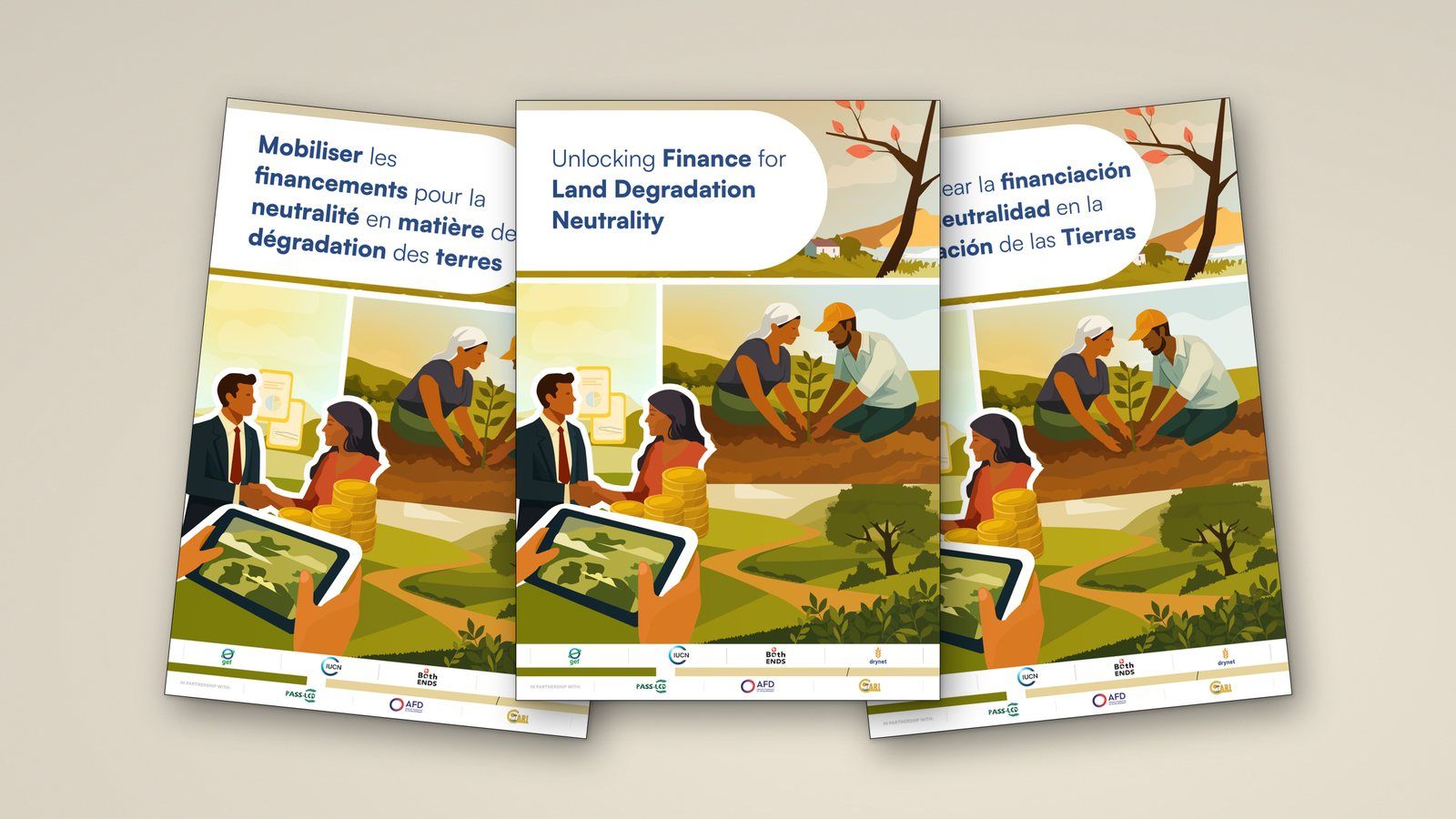
01Unlocking Finance for Land Degradation Neutrality.
02The report’s illustrated story in motion.
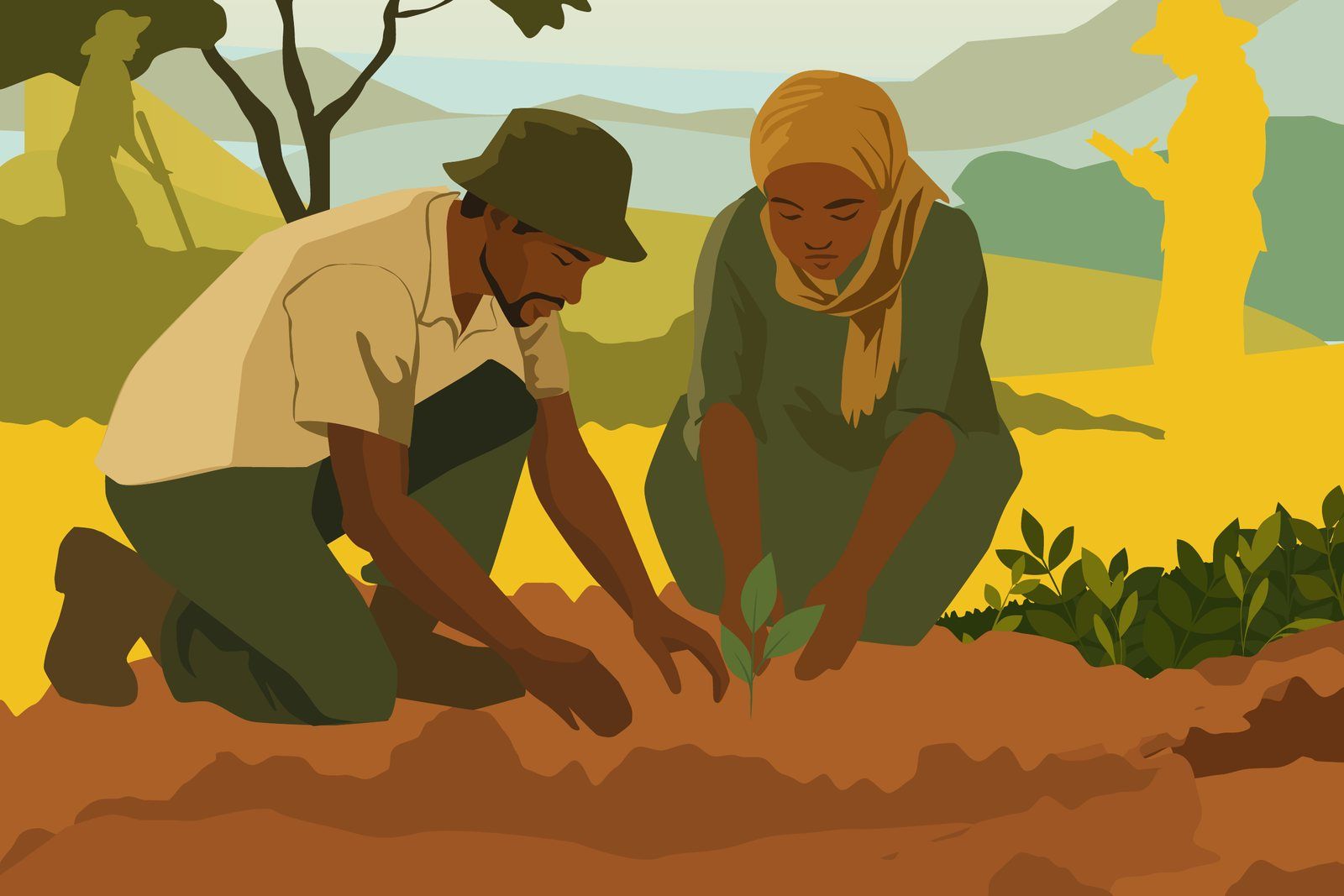
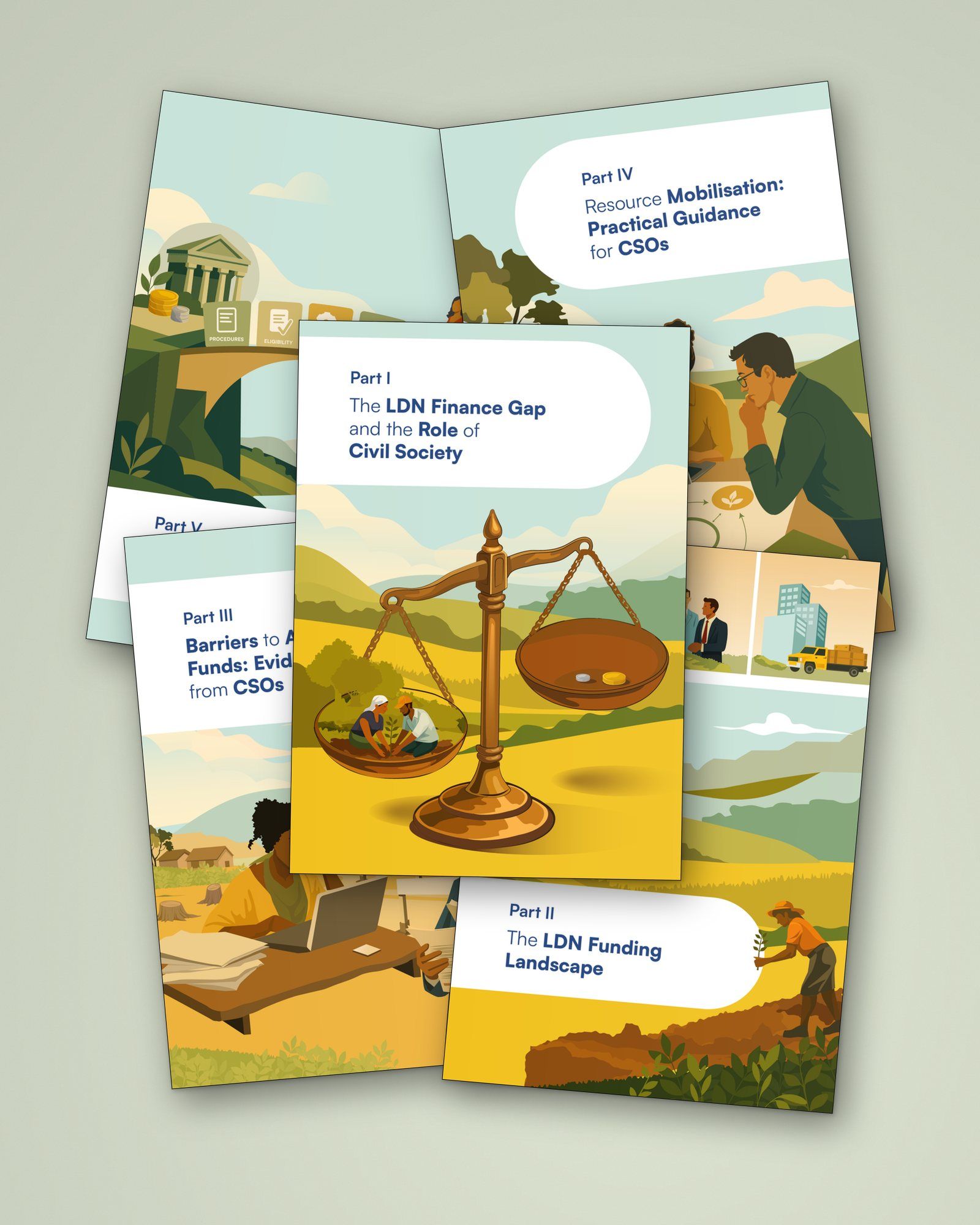
03Illustrations connecting land restoration, civil society and finance.
04The finance gap and the conditions shaping access to funding.
05A publication designed for reference as well as reading.
06Different ways into the same findings.
Organisations with the knowledge to restore land often struggle to access the funding to do it.
- 436 483impressions, 29 May to 19 June 2026
- 4 253link clicks to the report page
- 958new followers for the IUCN Forest and Grasslands LinkedIn page
How we got there
In this case study
The Client
Drynet connects civil society organisations working on drylands and sustainable land management. Through the CS4LDN project, it works with IUCN and Both ENDS to strengthen civil society’s role in achieving Land Degradation Neutrality.
The project brings the experience of organisations working with communities into discussions about land policy and investment. Its publication, Unlocking Finance for Land Degradation Neutrality, examines a practical problem: organisations with the knowledge to restore land often struggle to access the funding to do it.
The Assignment
We worked on the report and its launch campaign, bringing together English editing, French and Spanish translation, publication design and communications.
The work had to serve two audiences. Civil society organisations needed help understanding funding opportunities and requirements. Donors needed to understand how those requirements could exclude the people their funding was intended to support.
The challenge
The report drew on responses from 226 organisations. It covered the funding landscape, barriers to access and recommendations for both civil society and donors, alongside practical tools for approaching funders.
That material needed to remain useful in detail while giving readers a clear way into the subject. The communications also had to explain why the findings mattered to people encountering them in a social media feed.
Making the relationships visible
We developed handcrafted illustrations around the people and relationships described in the report. Communities planting and caring for land appear alongside civil society teams preparing applications, planning projects and speaking with institutions.
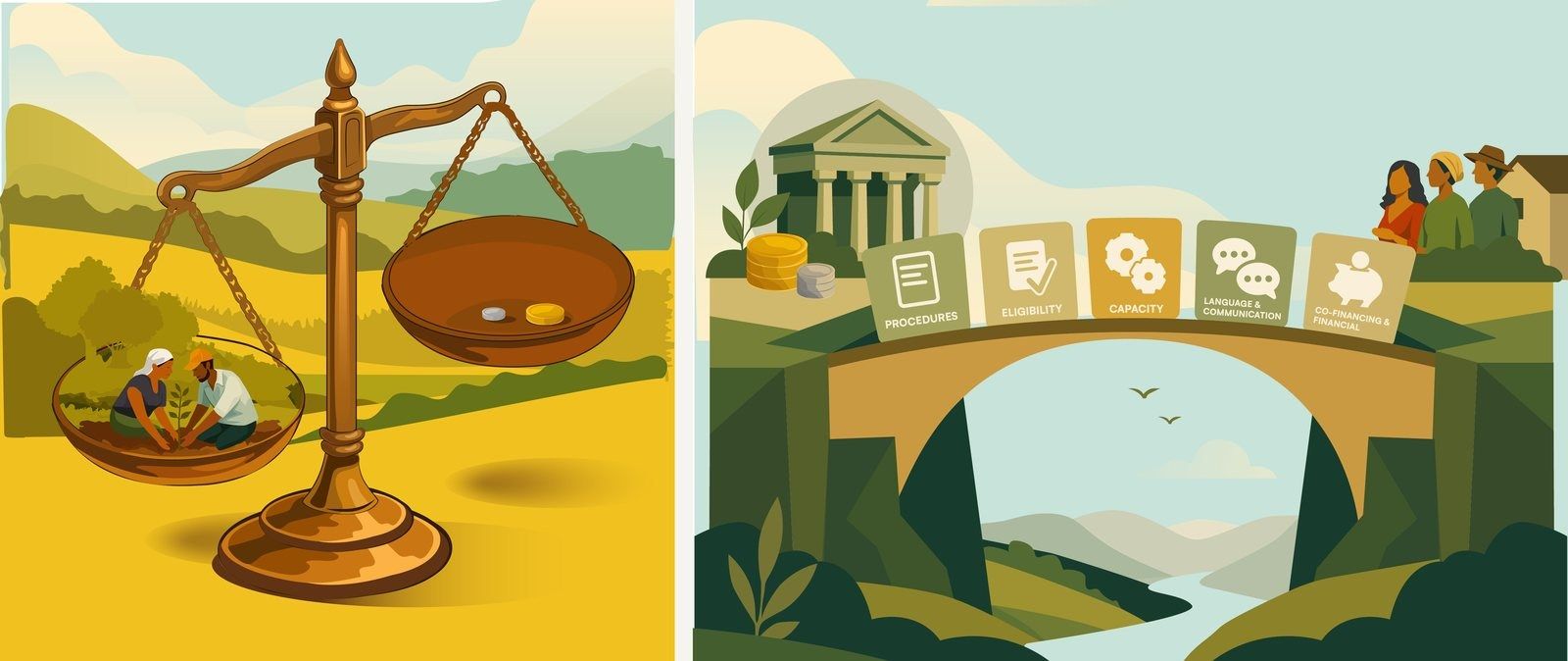
The illustrations give abstract financial questions a recognisable setting. A balance places people restoring land on one side and a small amount of money on the other. A bridge connects a financial institution with a community, carrying the procedures, eligibility requirements and other conditions that shape access to funding.
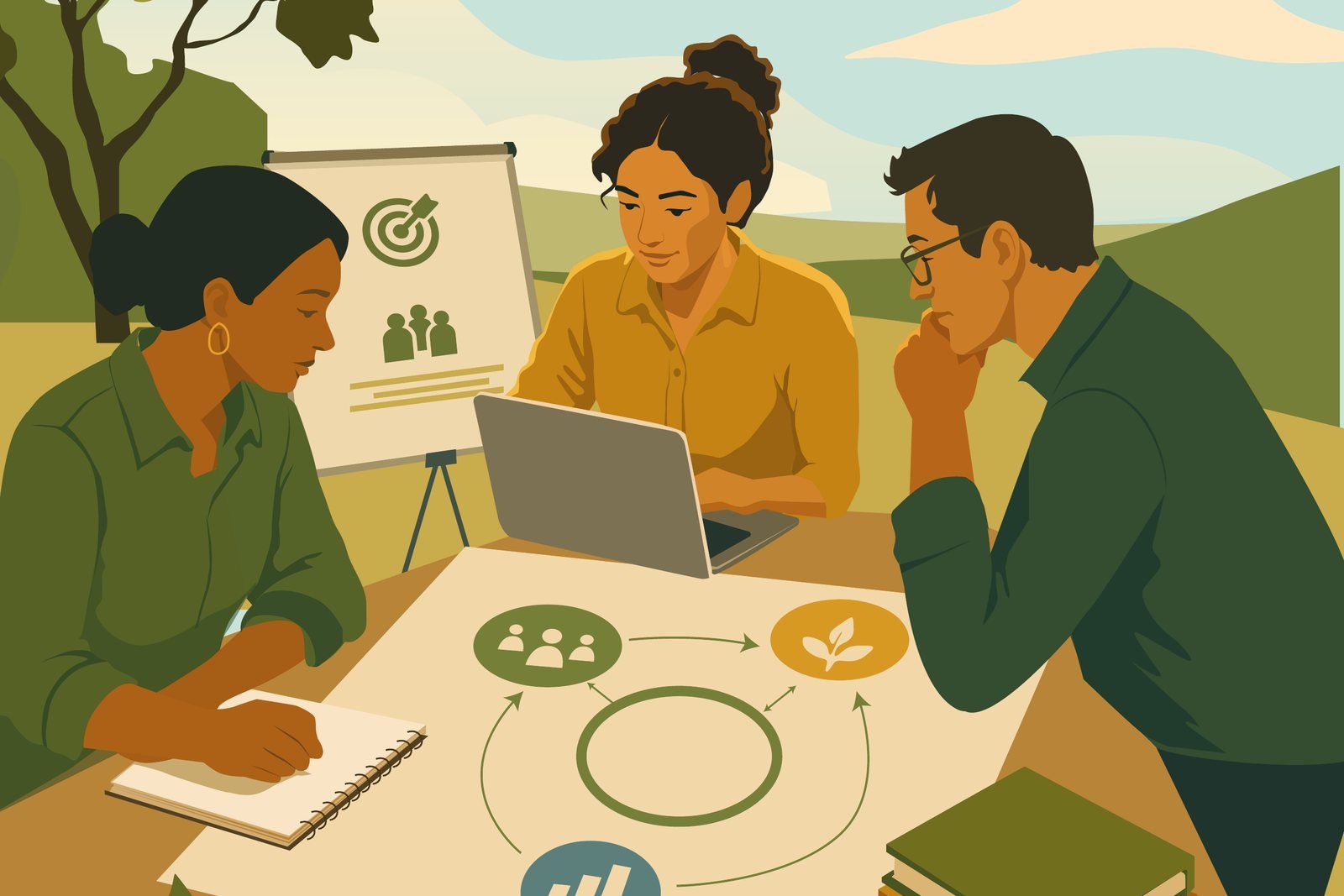
These scenes run through the cover and chapter openings. They connect the report’s analysis to the people affected by it and give each part of the publication a distinct visual starting point.
A publication people can use
We edited and restructured the English text for clarity and consistency, then translated and designed the report in English, French and Spanish.
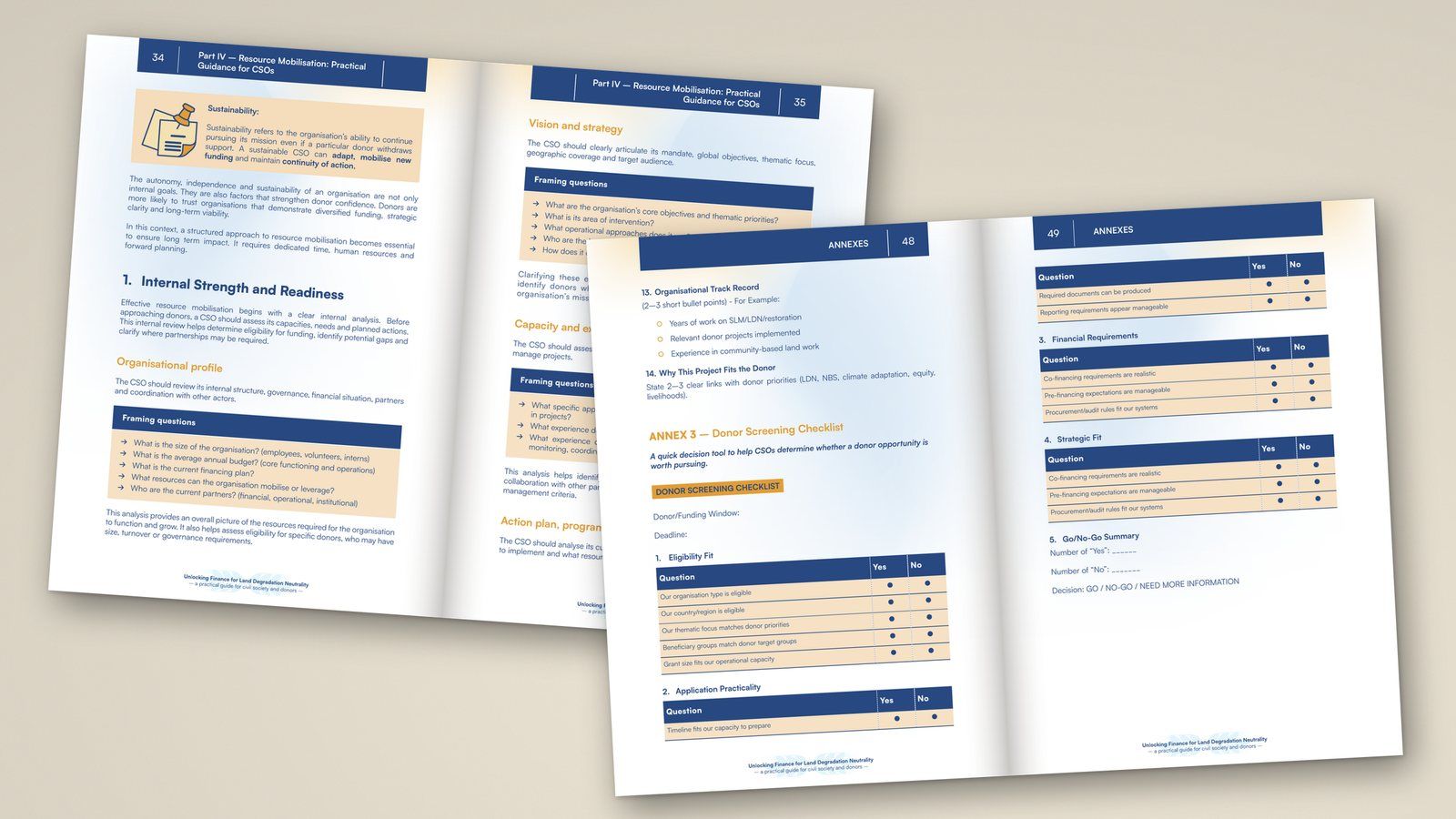
The 57-page English edition combines illustrated section openings with a consistent hierarchy for the detailed content. Running headers locate the reader within the report; highlighted boxes bring out definitions and questions; tables organise requirements and recommendations.
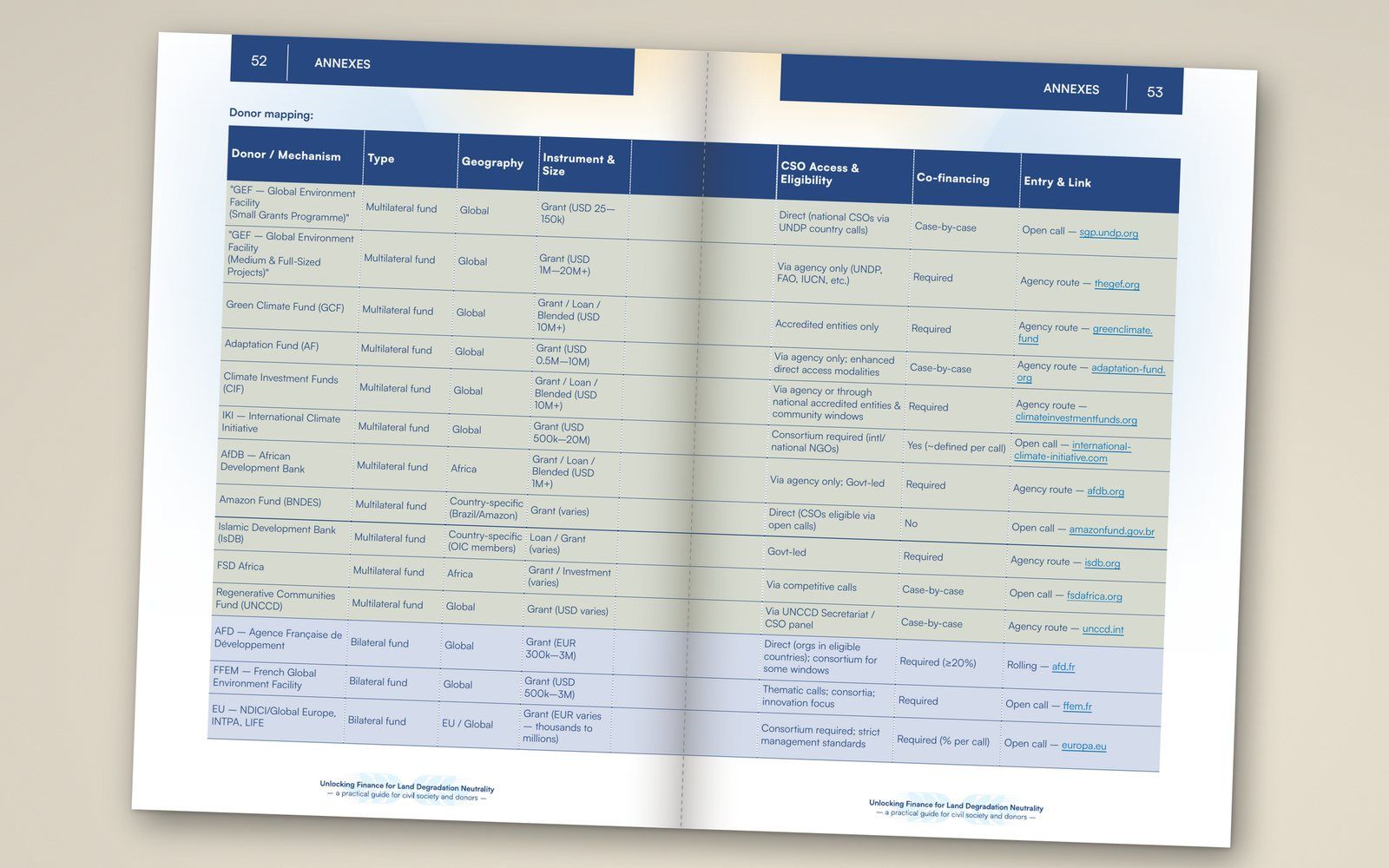
The practical annexes include a project brief template, a donor screening checklist and an internal readiness checklist. Together, these give readers ways to apply the guidance when preparing projects and approaching funders.
The publication also became an early application of Drynet’s refreshed identity, connecting the new visual language with a substantial piece of the network’s work.
Taking the story beyond the report
Working with communications strategist Ioana Matei, we developed a campaign around the findings and the needs of its two audiences.
We carried the illustrated characters and settings into a narrated animation with subtitles. The sequence moves from the importance of land and the work of communities to the finance gap, the barriers behind it and the changes needed from donors and civil society.
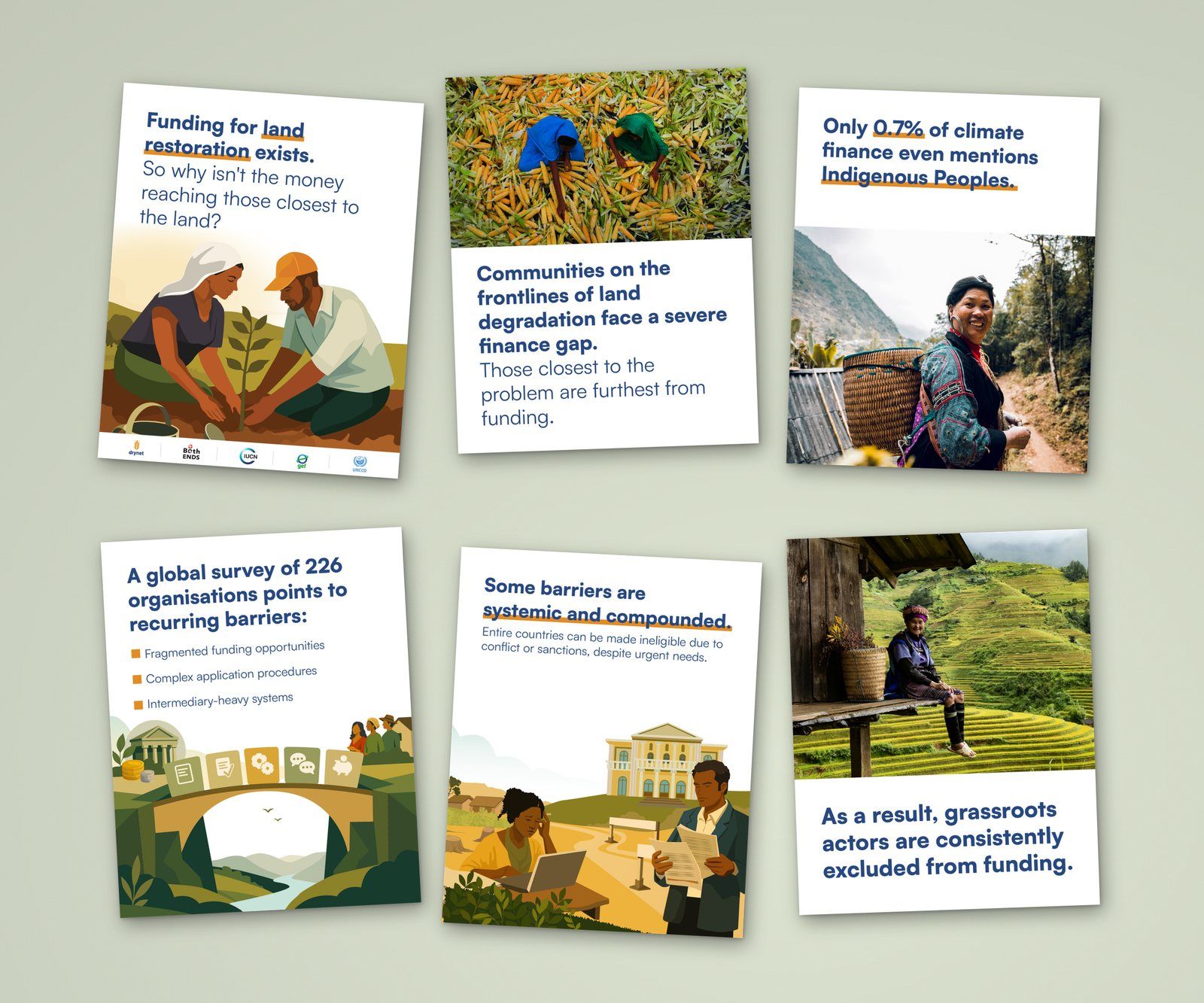
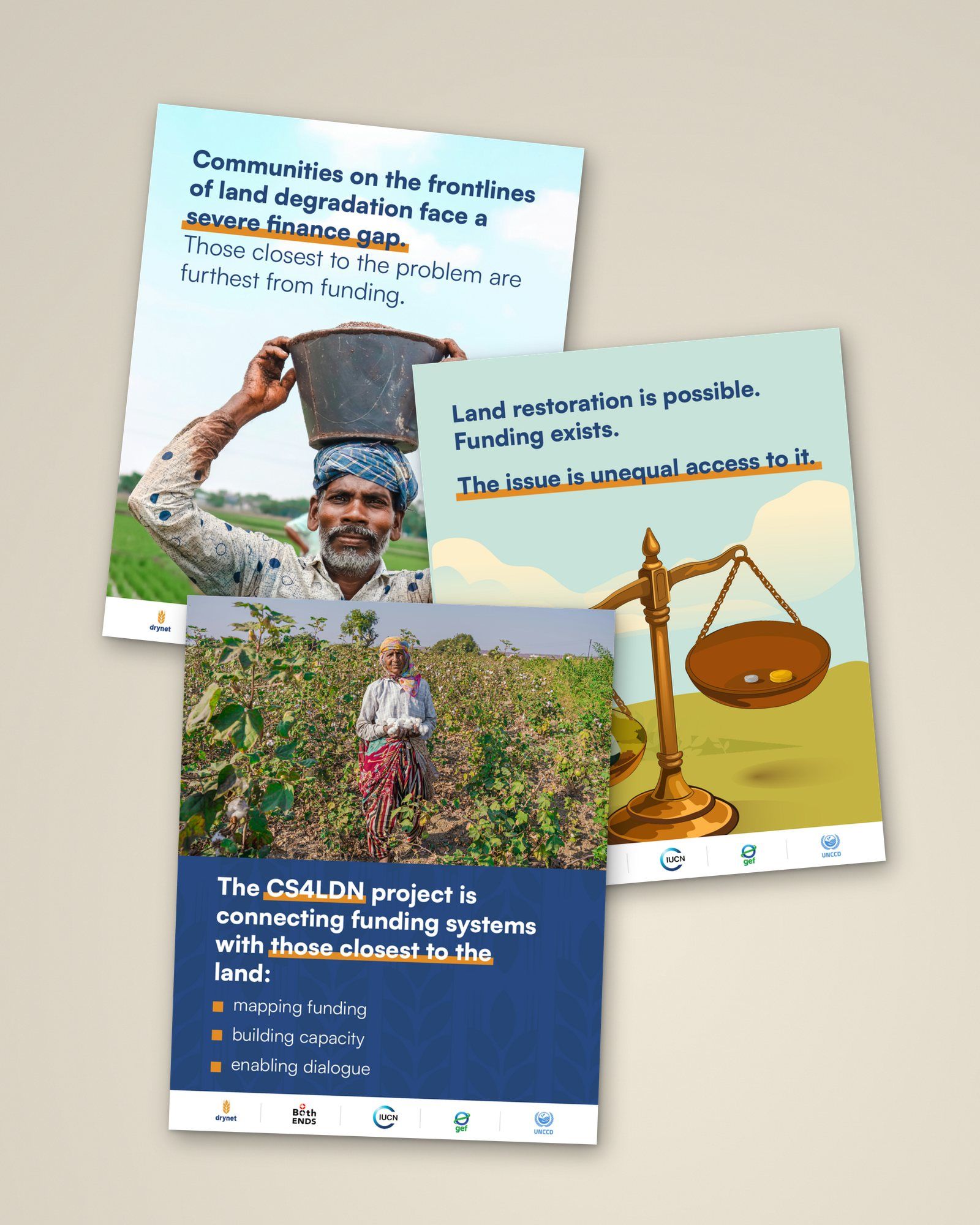
Social cards and LinkedIn carousels provided further ways into the subject. The campaign combined illustration with photography, using shorter messages to introduce findings and direct interested readers to the publication.
Paid LinkedIn activity targeted donors and civil society organisations separately, with the media budget divided equally between them.
The campaign results
From 29 May to 19 June 2026, the campaign recorded 436,483 impressions and 6,251 clicks, including 4,253 link clicks to the report page, against a reported media budget of US$2,000.
The overall click-through rate was 1.43%. The campaign report records a 5.59% average click-through rate for video, compared with 0.9% for static images. It also records 958 new followers for the IUCN Forest and Grasslands LinkedIn page.
The donor audience included engagement from people at organisations such as GIZ, JICA and the African Development Bank.
Penrose
- Editorial and translation
- Illustration
- Publication design
- Campaign, animation and paid social
Penrose CDB, working with Ioana Matei on communications strategy and campaign delivery.