
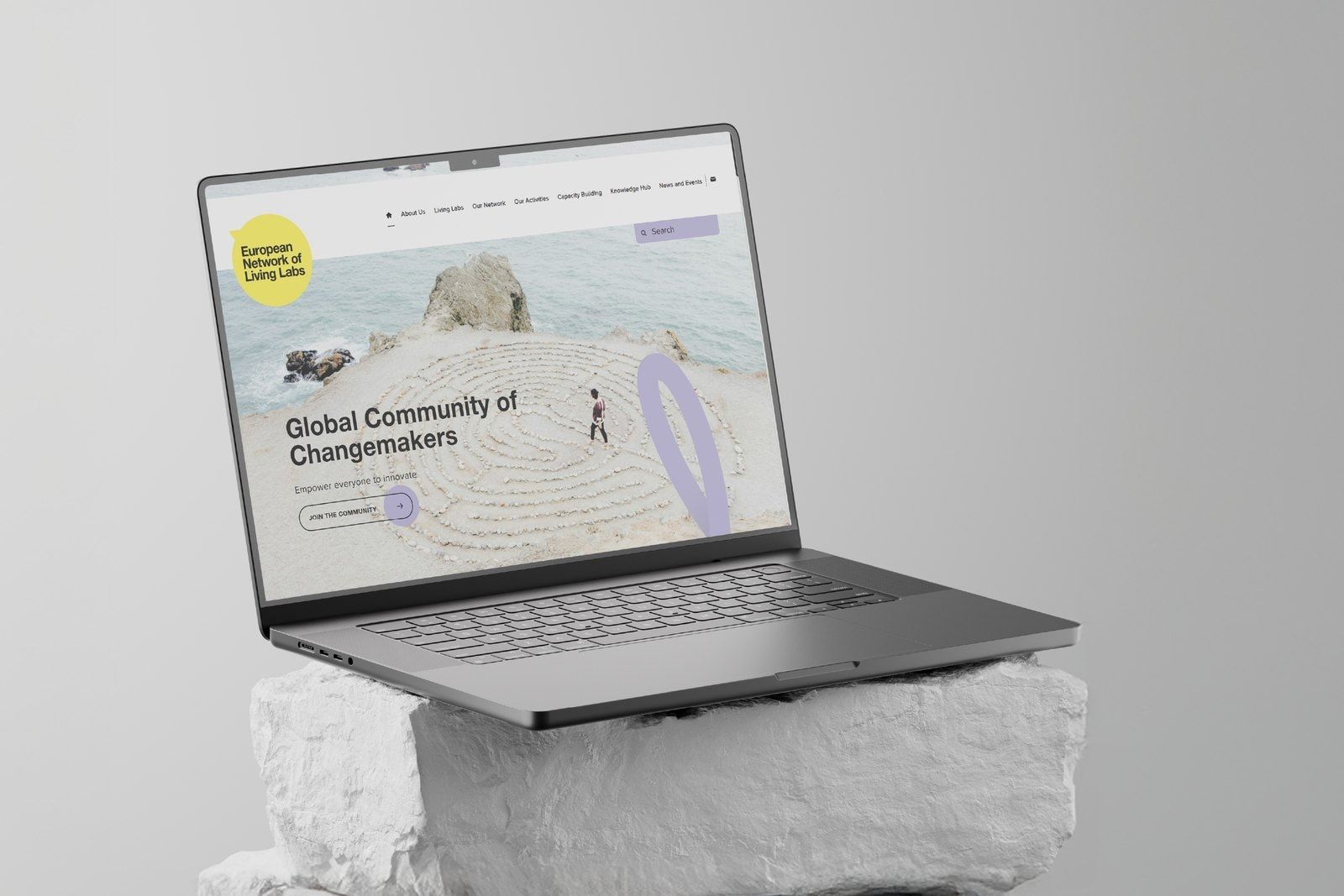
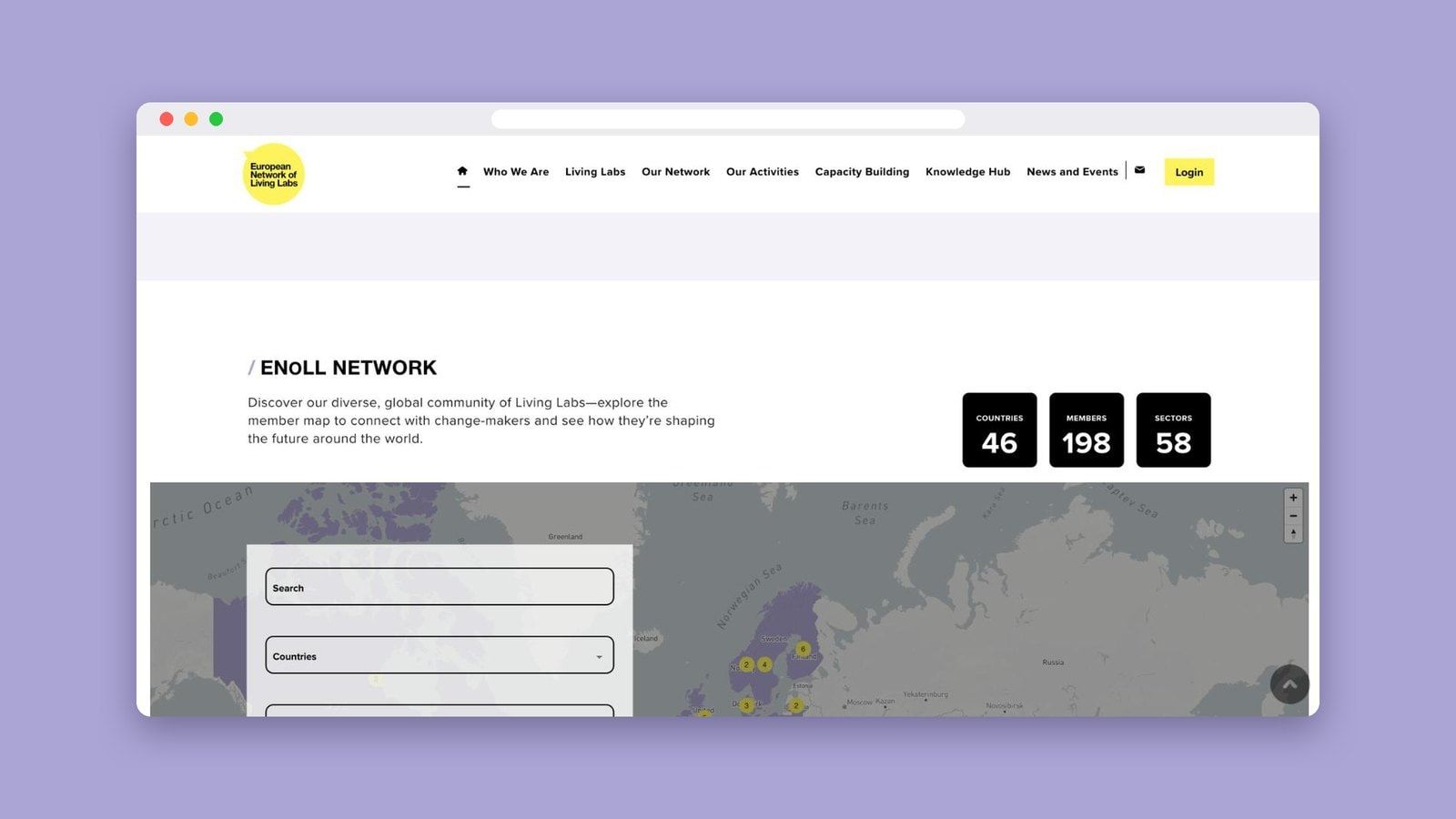
The European Network of Living Labs brings together organisations that develop and test ideas with the people who will use them. Founded in 2006 and based in Brussels, it now connects 198 active members across 46 countries and five continents. We worked with ENoLL to bring its visual identity, activities and community into a website that its communications team could shape themselves. The work connected discovery, user experience and design with a customised WordPress platform and ongoing technical support.
- ClientEuropean Network of Living Labs, Brussels
- WorkStrategy and discovery, UX, information architecture, UI design and implementation, WordPress development, migration and integrations
- Website programme2024–2025
The work
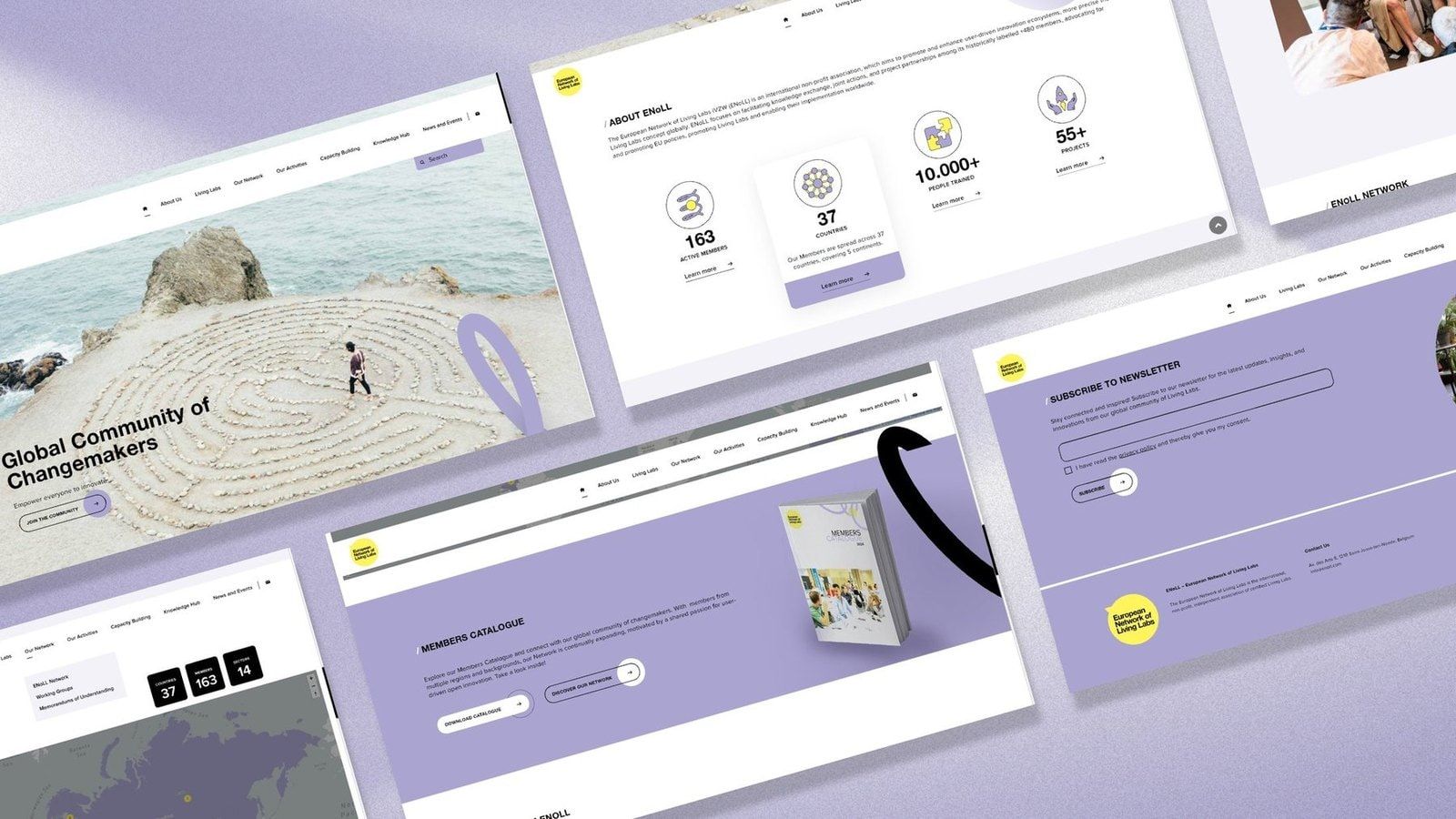
01The visual work translated ENoLL’s identity into a system for the website.
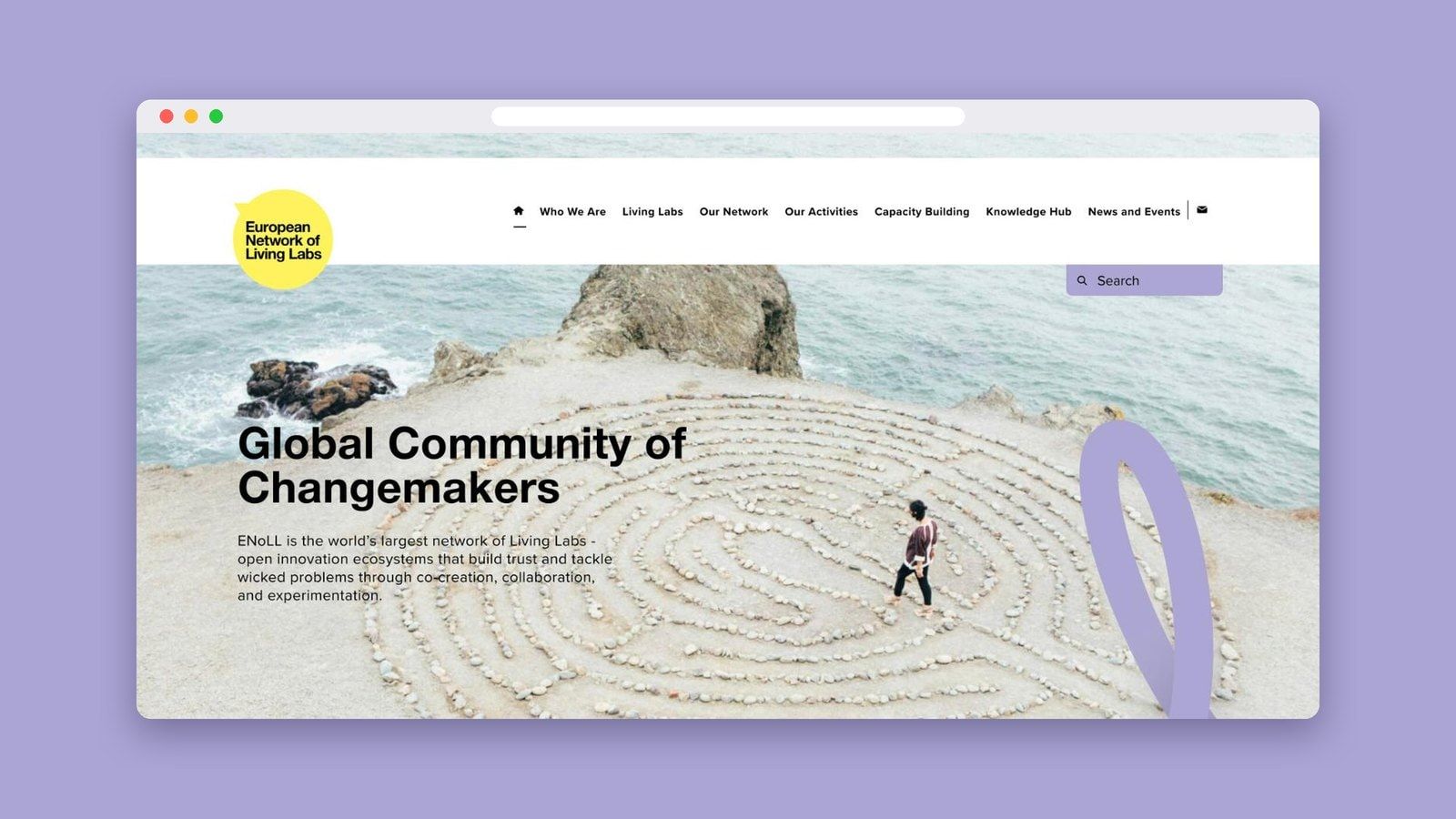
02The website had to work for people discovering Living Labs and for a community already familiar with them.
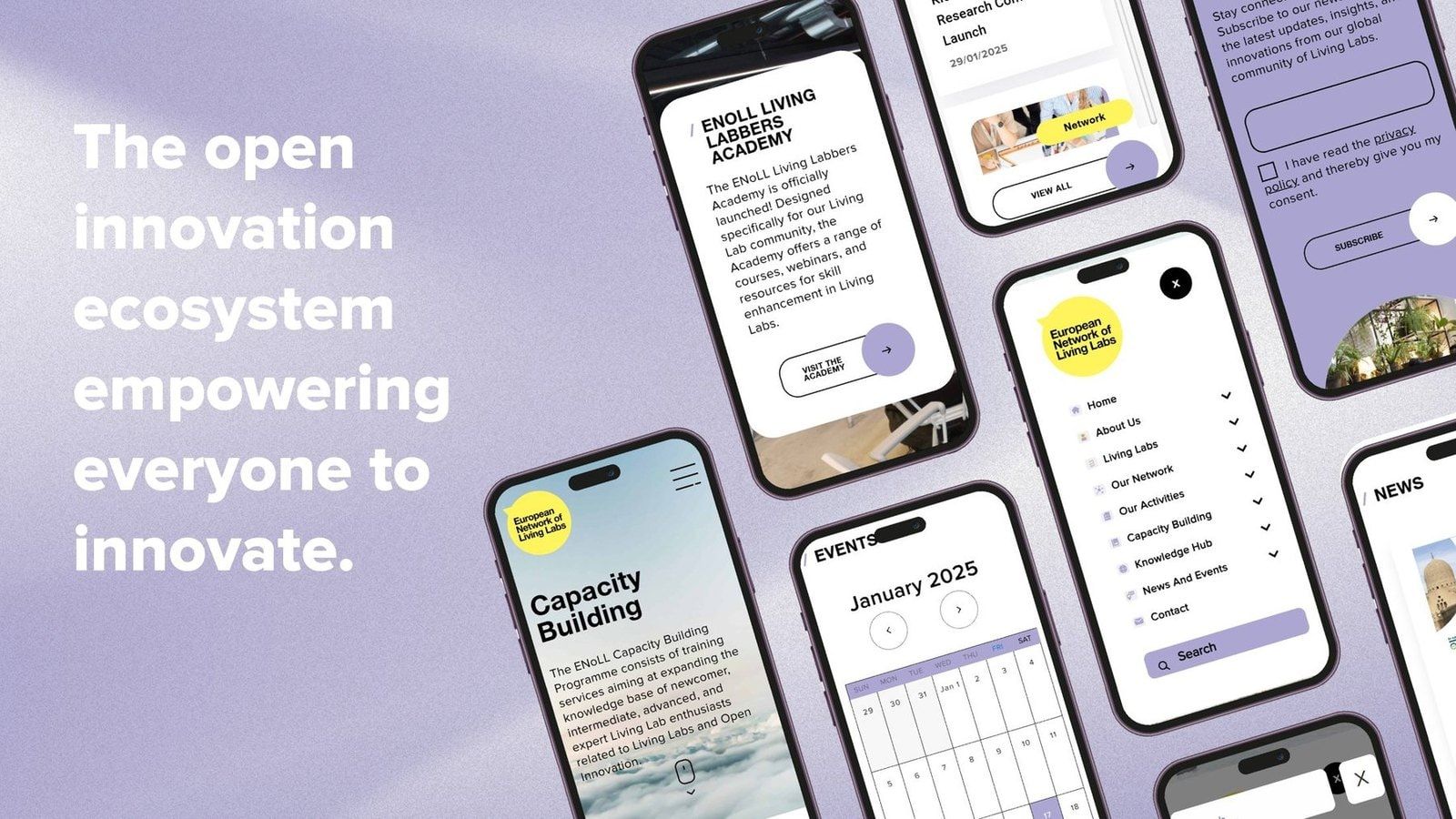
03The different elements give the pages a recognisable character while leaving room for practical information about programmes, members and events.
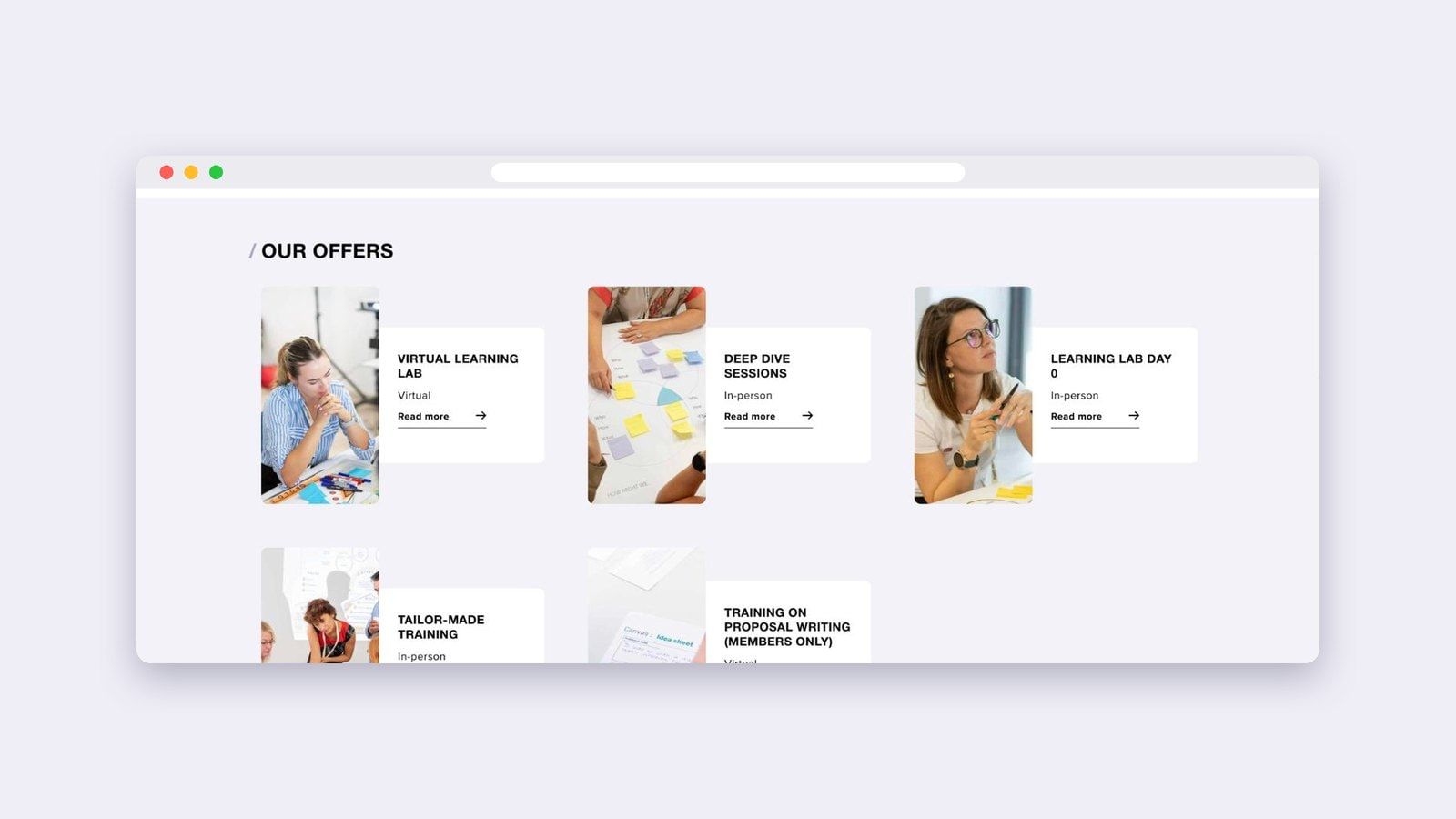
04Capacity building has a dedicated section, with routes to training and the Living Labbers Academy.
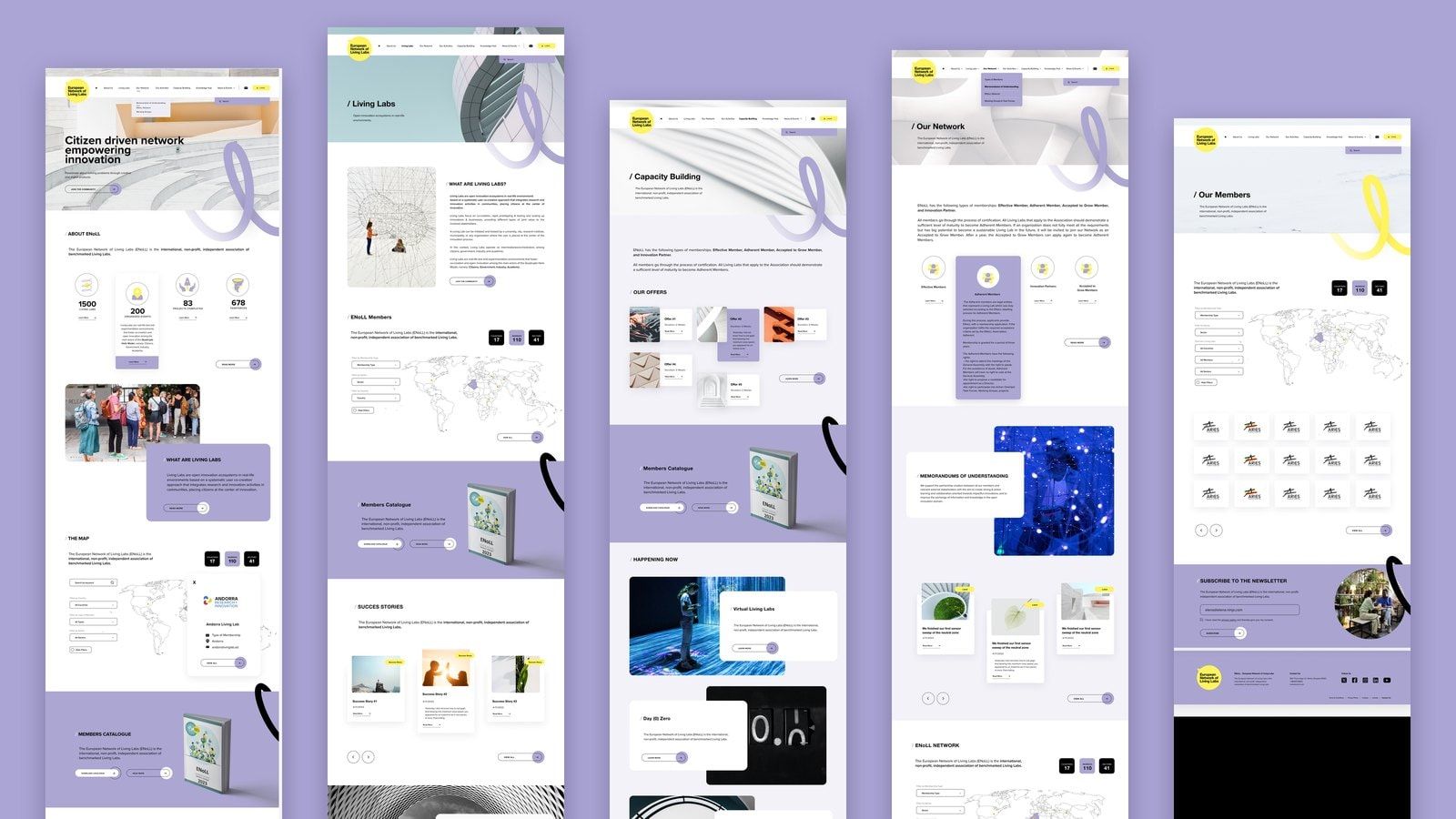
05Reusable styles, components and page templates gave the communications team a common set of parts from which to work.
Editorial freedom depended on having useful design tools available inside the CMS, so the identity could continue to work as the team added and adapted content.
How we got there
In this case study
The brief
Our relationship with ENoLL began in 2017, through digital and graphic design assignments. The main website rebuild brought a wider set of needs together: explaining the Living Lab approach, representing the network and its services, and giving the communications team a platform they could manage independently.
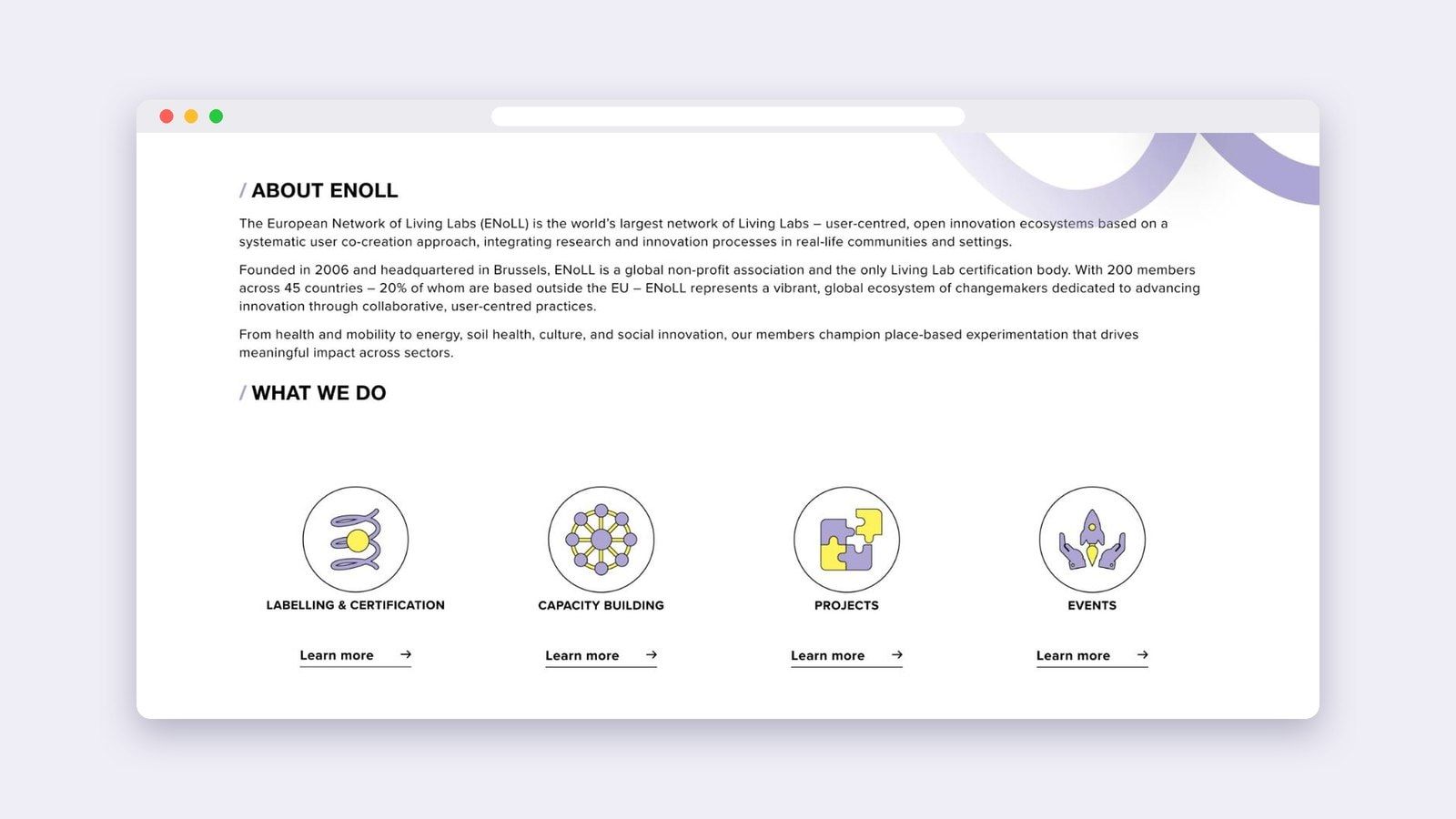
ENoLL had been developing its visual identity and digital presence as part of a broader communications programme. The website needed to carry that direction into everyday use, across pages with different purposes and levels of detail.
WordPress and Elementor were specified in the brief. ENoLL also made the intended way of working clear: its team needed to update content, modify layouts and create new pages using the elements and styles established for the website.
That requirement shaped the implementation as much as the public-facing experience.
Different starting points, clearer routes
The website had to work for people discovering Living Labs and for a community already familiar with them.
Newcomers needed a clear explanation of the approach and the role ENoLL plays. Members needed to find activities, learning opportunities, other organisations and shared knowledge. ENoLL’s own communications priorities called for better representation of its services and members, alongside dedicated space for Living Lab stories, partnerships and working groups.
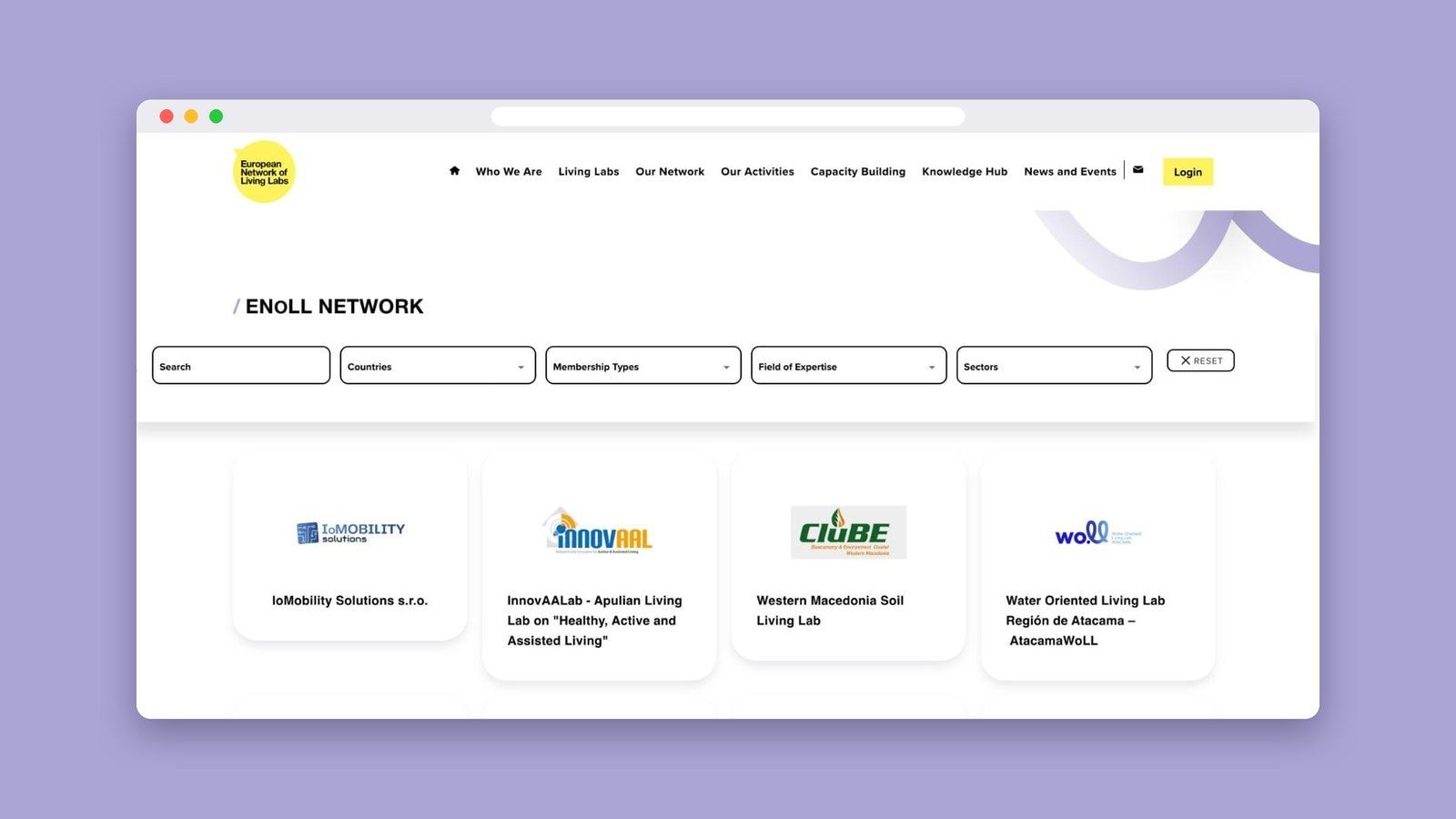
Our UX and information architecture work addressed those different starting points. The structure gives Living Labs, the network, activities and capacity building their own routes, alongside news, events and access to the Knowledge Hub.
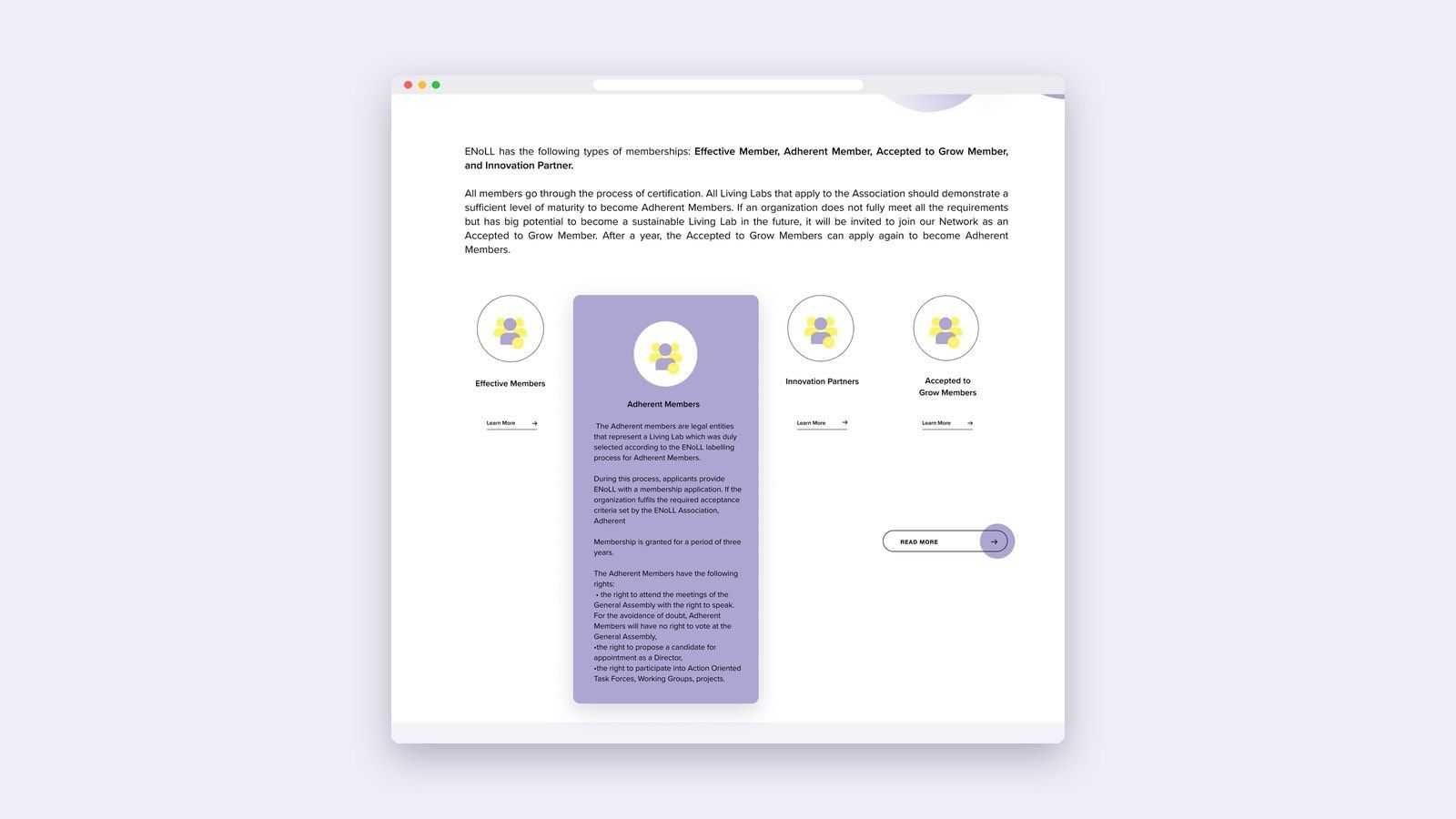
Capacity building has a dedicated section, with routes to training and the Living Labbers Academy. Membership information and the catalogue make the community itself part of the experience. The structure helps visitors move from understanding what ENoLL does to finding a way to take part.
Bringing the identity into everyday use
The visual work translated ENoLL’s identity into a system for the website.
The archived website design combines a prominent yellow logo with soft colour accents, open layouts, photography and curved graphic forms. The different elements give the pages a recognisable character while leaving room for practical information about programmes, members and events.
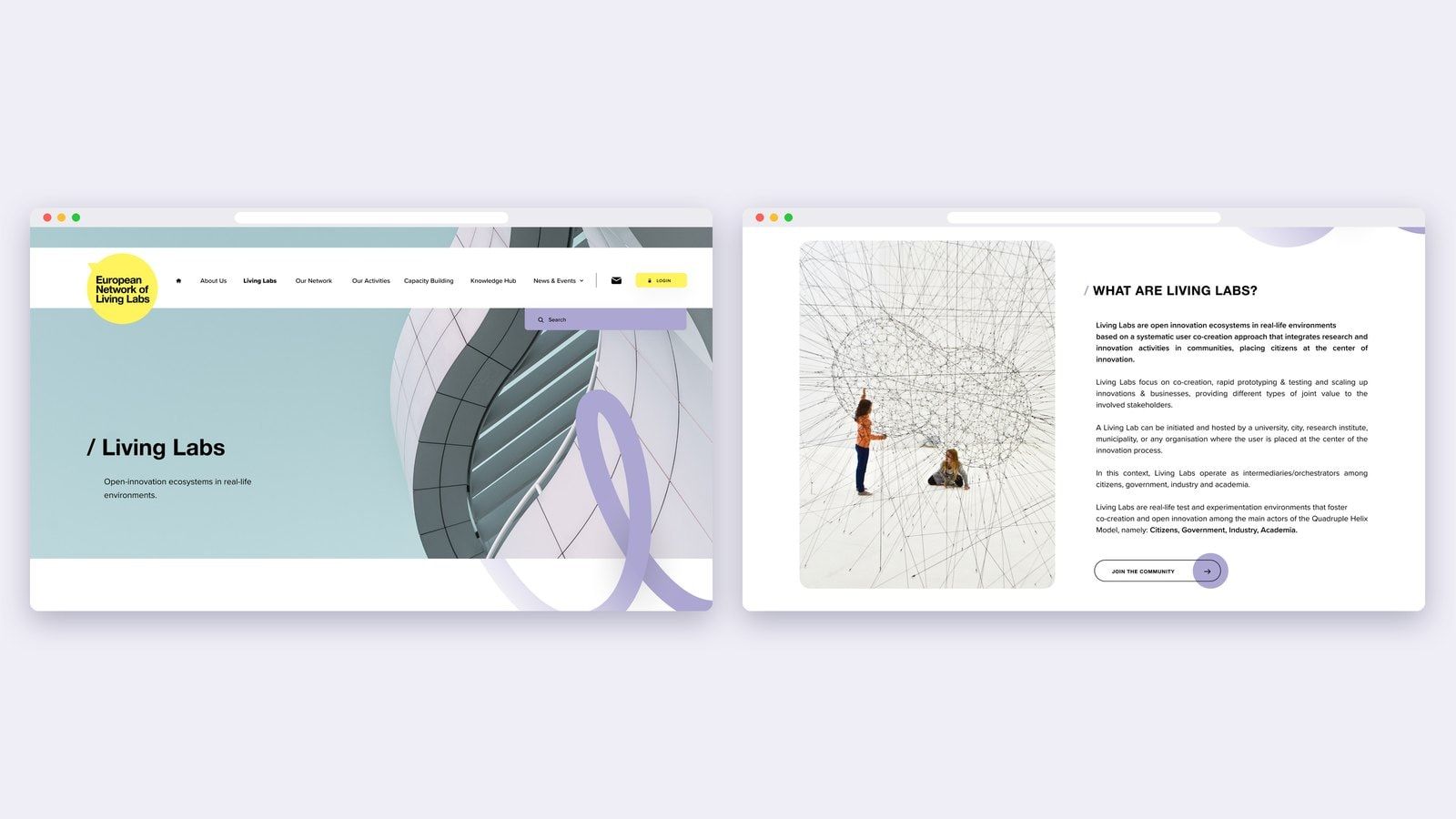
We carried that approach into a highly customised Elementor system. Reusable styles, components and page templates gave the communications team a common set of parts from which to work.
The aim was for newly created pages to remain connected to the rest of the website. Editorial freedom depended on having useful design tools available inside the CMS, so the identity could continue to work as the team added and adapted content.
Finding the network’s knowledge
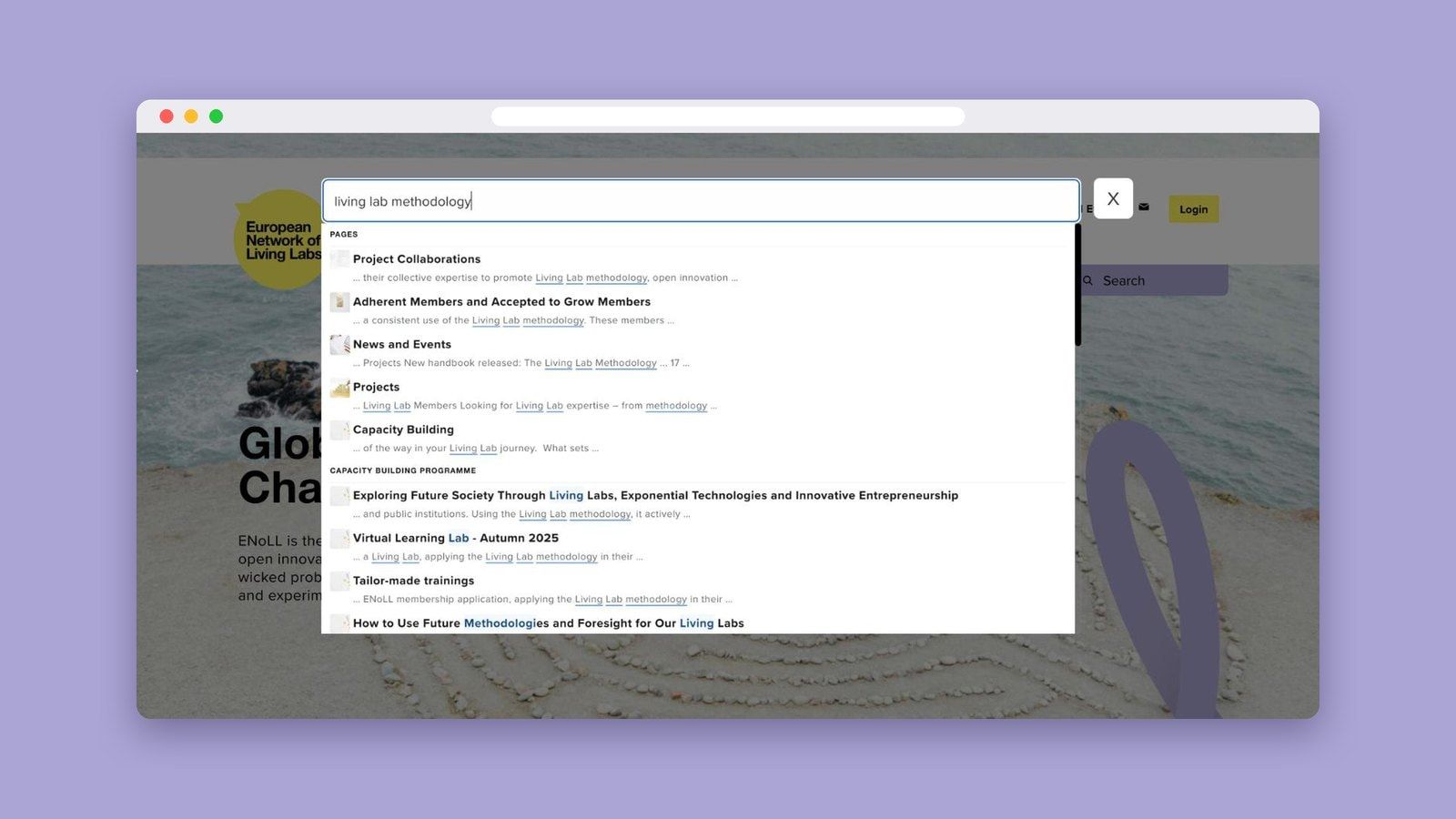
The website brings together several ways into ENoLL’s work: browsing its sections, exploring membership and learning opportunities, and searching for information.
Algolia supports search across the site’s content. This gives visitors another route when they arrive with a subject in mind, alongside the navigation and dedicated sections.
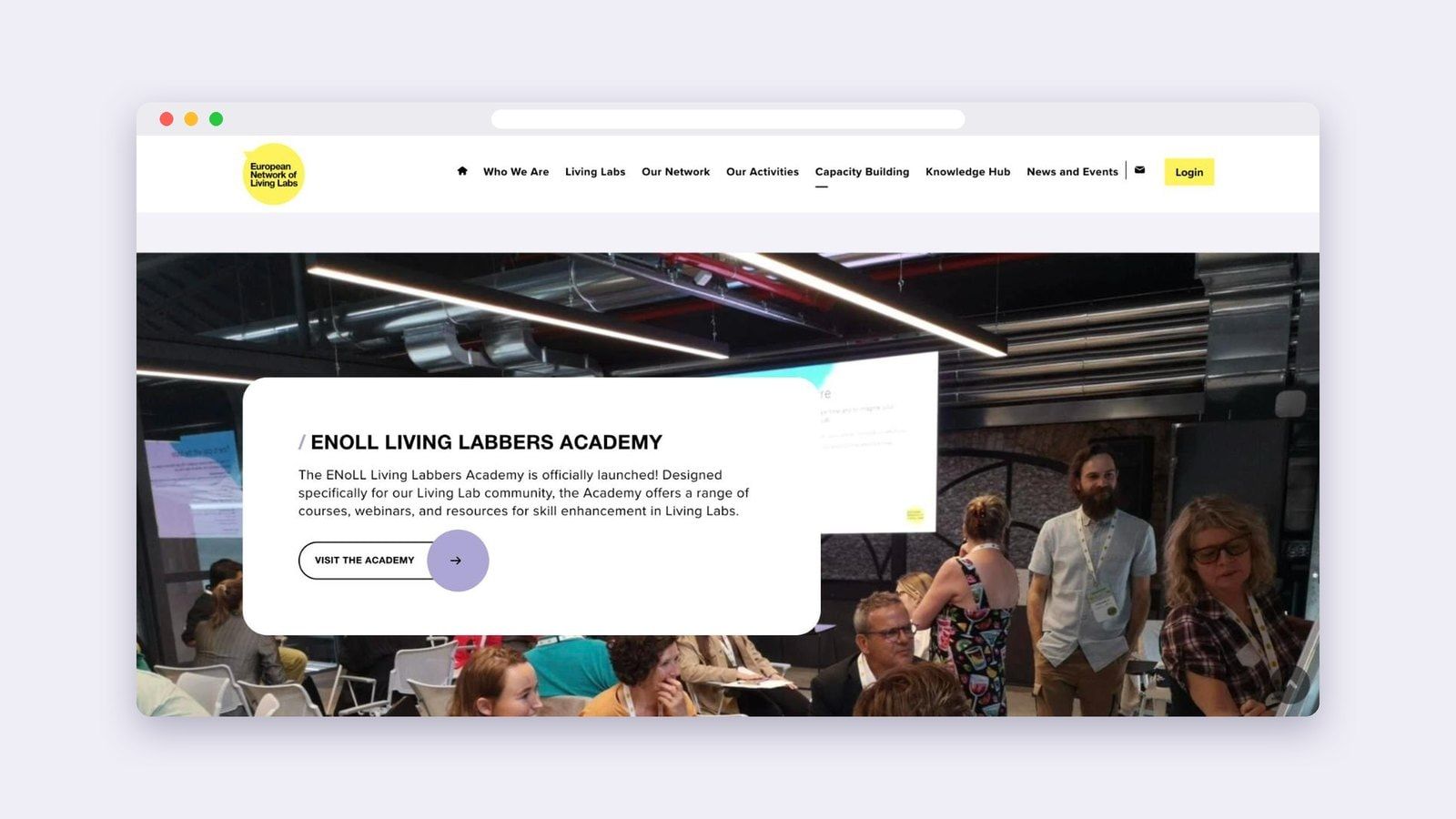
The Knowledge Hub sits within ENoLL’s wider digital offer, with a direct route from the main website. The same principle connects the website to the Academy: visitors can discover the opportunity on the organisational site and continue into the relevant service.
A platform the team can keep using
The work resulted in a website that brings ENoLL’s identity and activities into a shared experience, with tools for its communications team to manage content and compose pages.
After the rebuild, the relationship continued through maintenance, further development, hosting and security management. The maintenance agreement covers user support, security updates, infrastructure care and backup management, providing a practical basis for keeping the platform in use.
This continuing work supports the same objective as the rebuild: a website that serves the network and remains workable for the people looking after it.
Penrose
 Sorin PavelAccount and project management, solution architecture and UX
 Elena ReghintovschiUI design
 Bogdan PârvulescuDevelopment
 Cristi LunguDevelopment