
A clearer home for Europe’s architectural profession
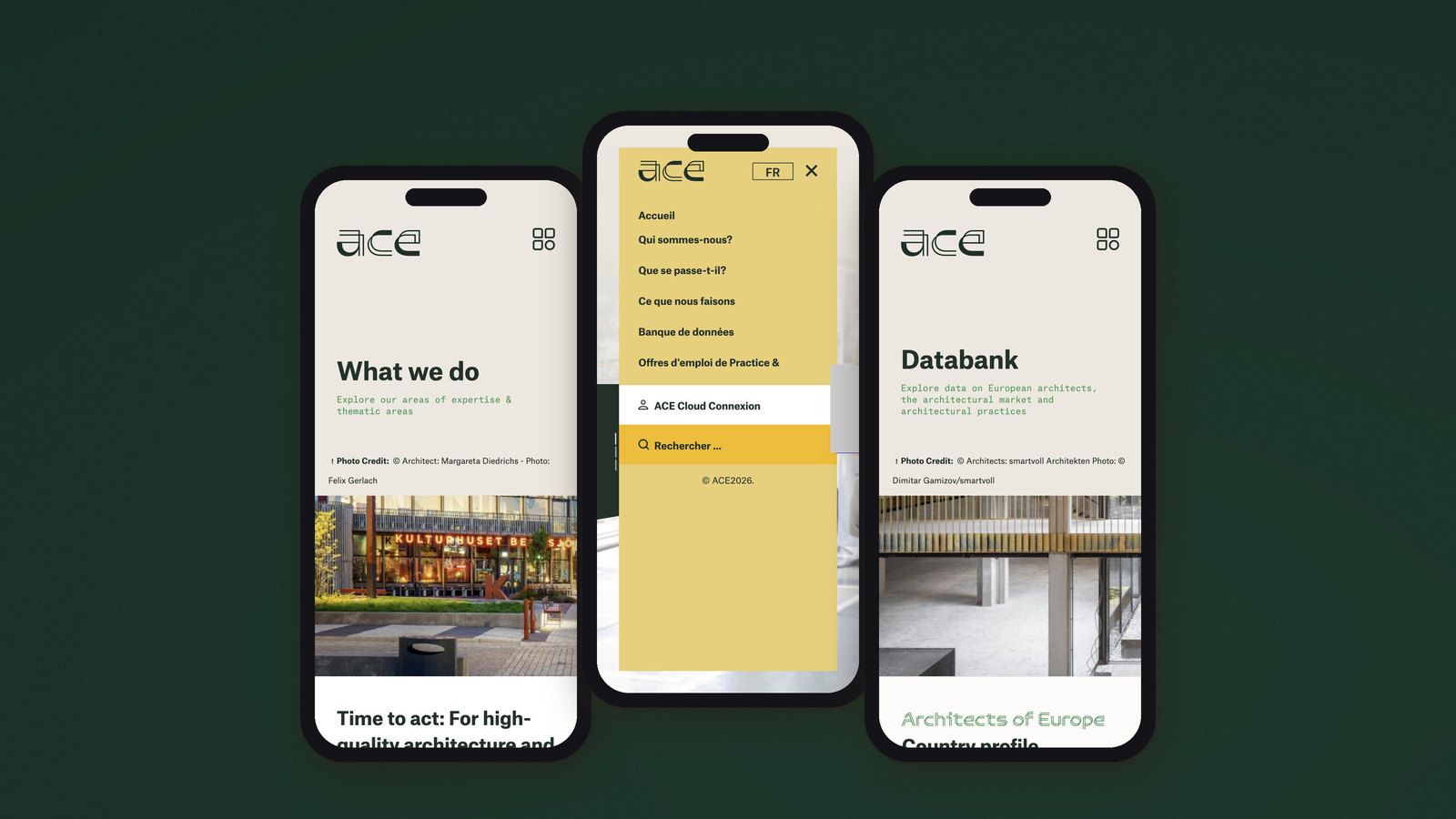
ACE’s website had to bring together the work of a European representative body and the information architects need in practice.
Visit the website (opens in a new tab)ace-cae.eu
- ClientArchitects’ Council of Europe
- WorkWebsite research, redesign, development and migration
- TimeframeMay 2022 to December 2024
- StatusLive, with ongoing support and development
The work
01Architectural photography, the custom display type and angled panels carried the identity into the page compositions.
02The resulting navigation separated ACE’s institutional role, current activities, policy work, professional resources and sector knowledge: Who we are, What’s on, What we do, Databank, and Practice & jobs.
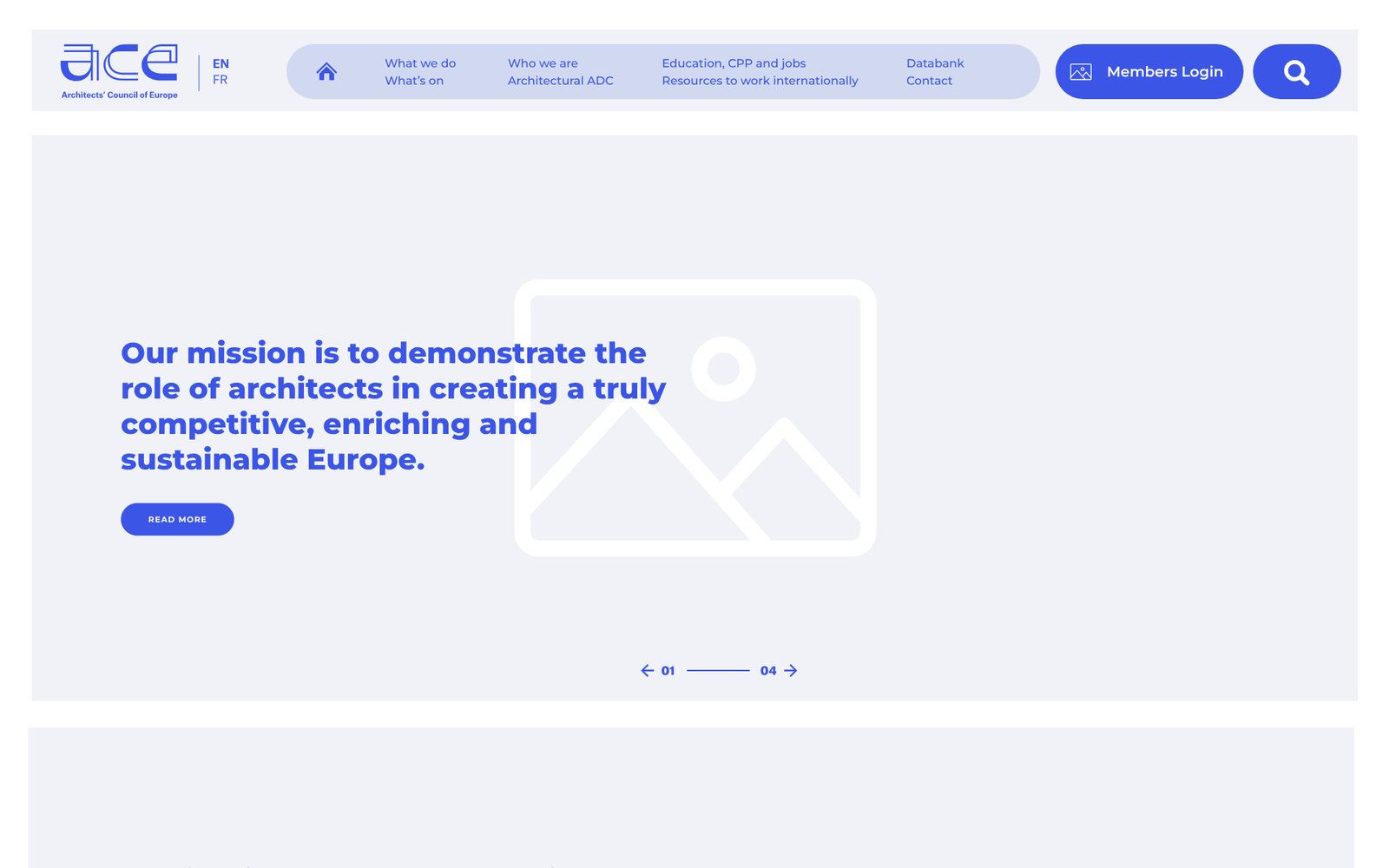
03Our approach put the structure and user journeys before the visual design.
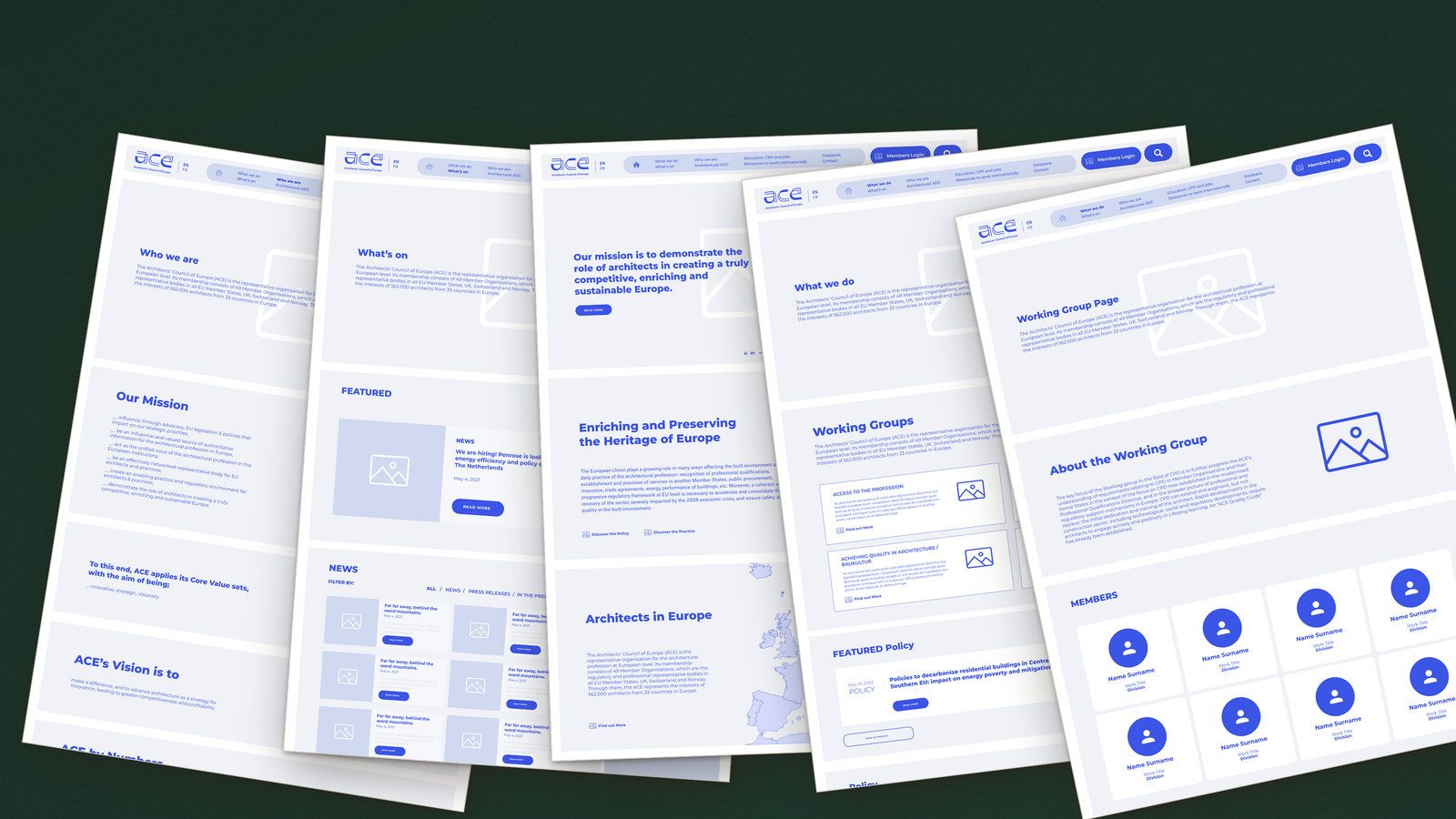
04Working through those decisions with ACE gave the team a way to review how the website would function before moving into interface design and development.
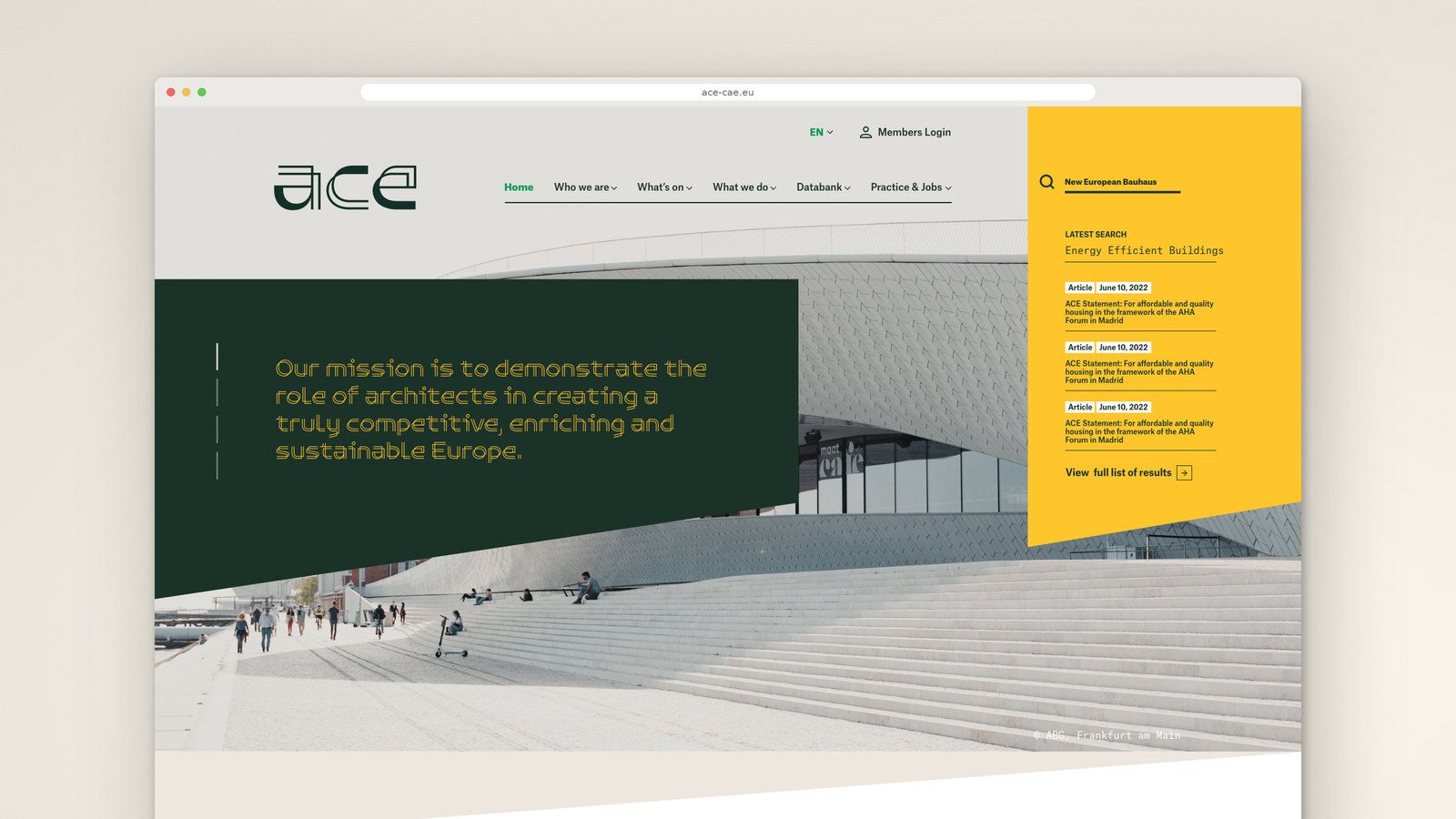
05The initial design proposal gave search a prominent yellow panel beside the main navigation.
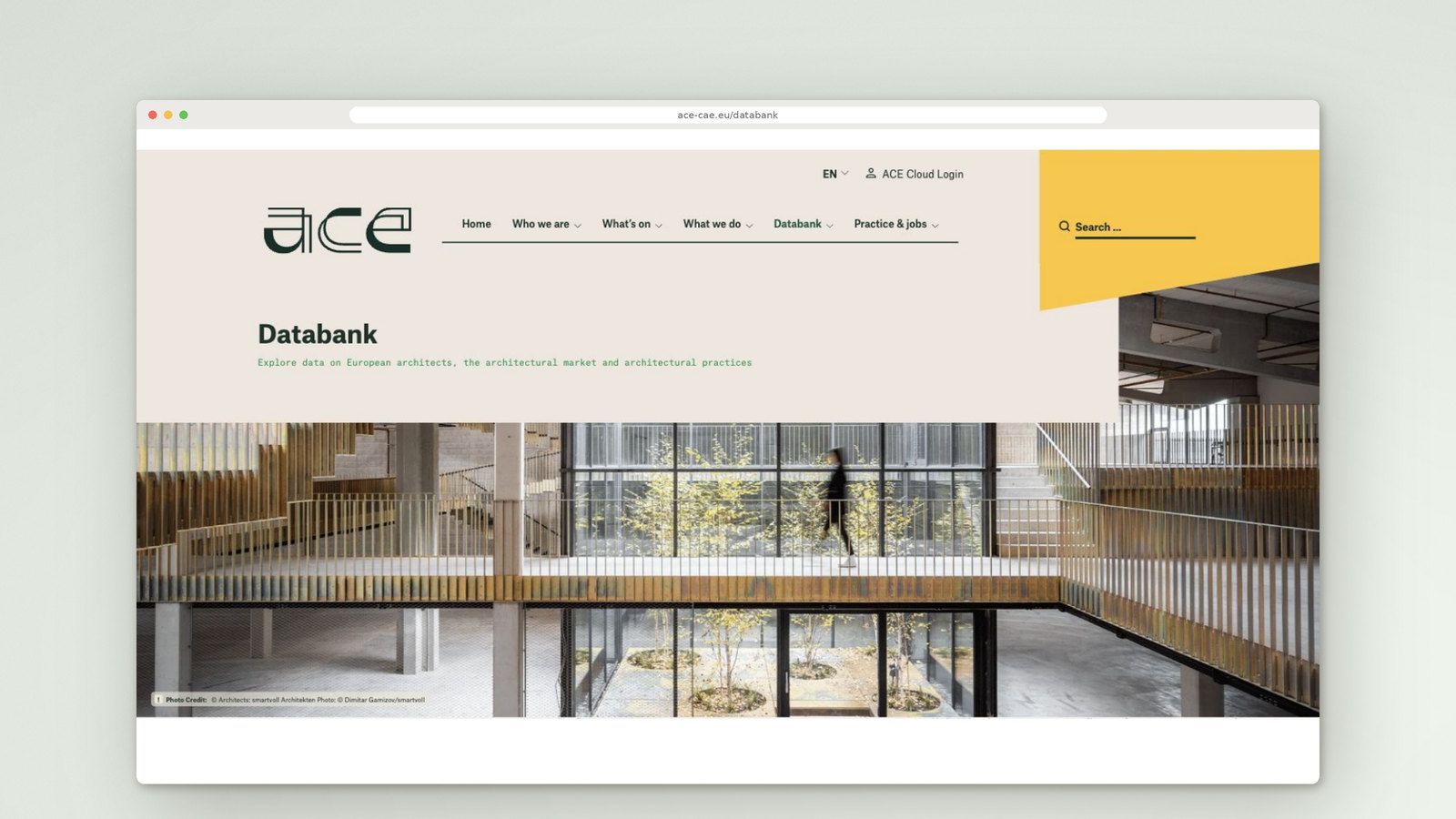
06The Databank gives country information, sector research, publications and architectural policies a shared entry point.
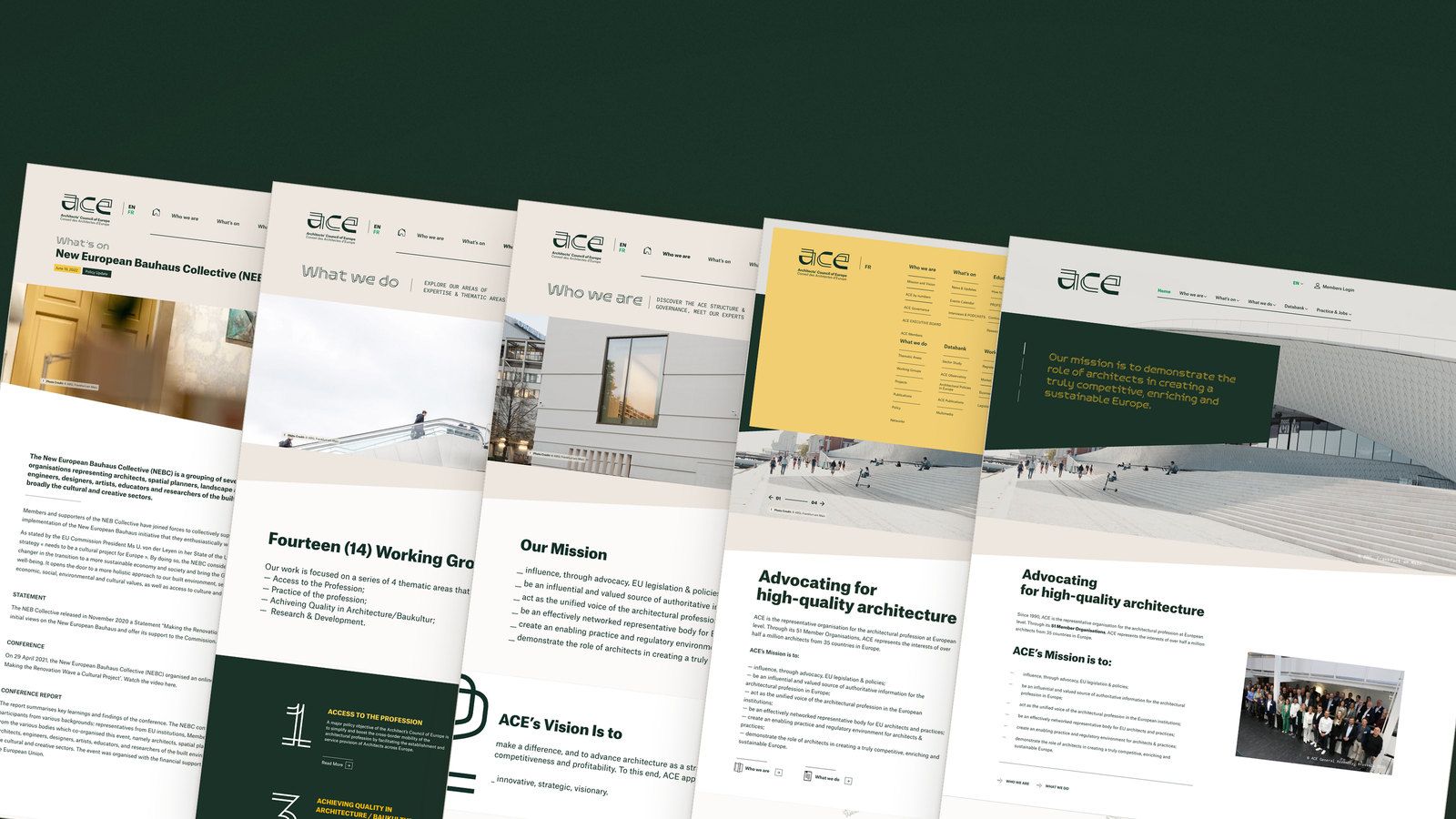
07Our role was to make that system work through navigation, page layouts, content cards, filters and reusable components.
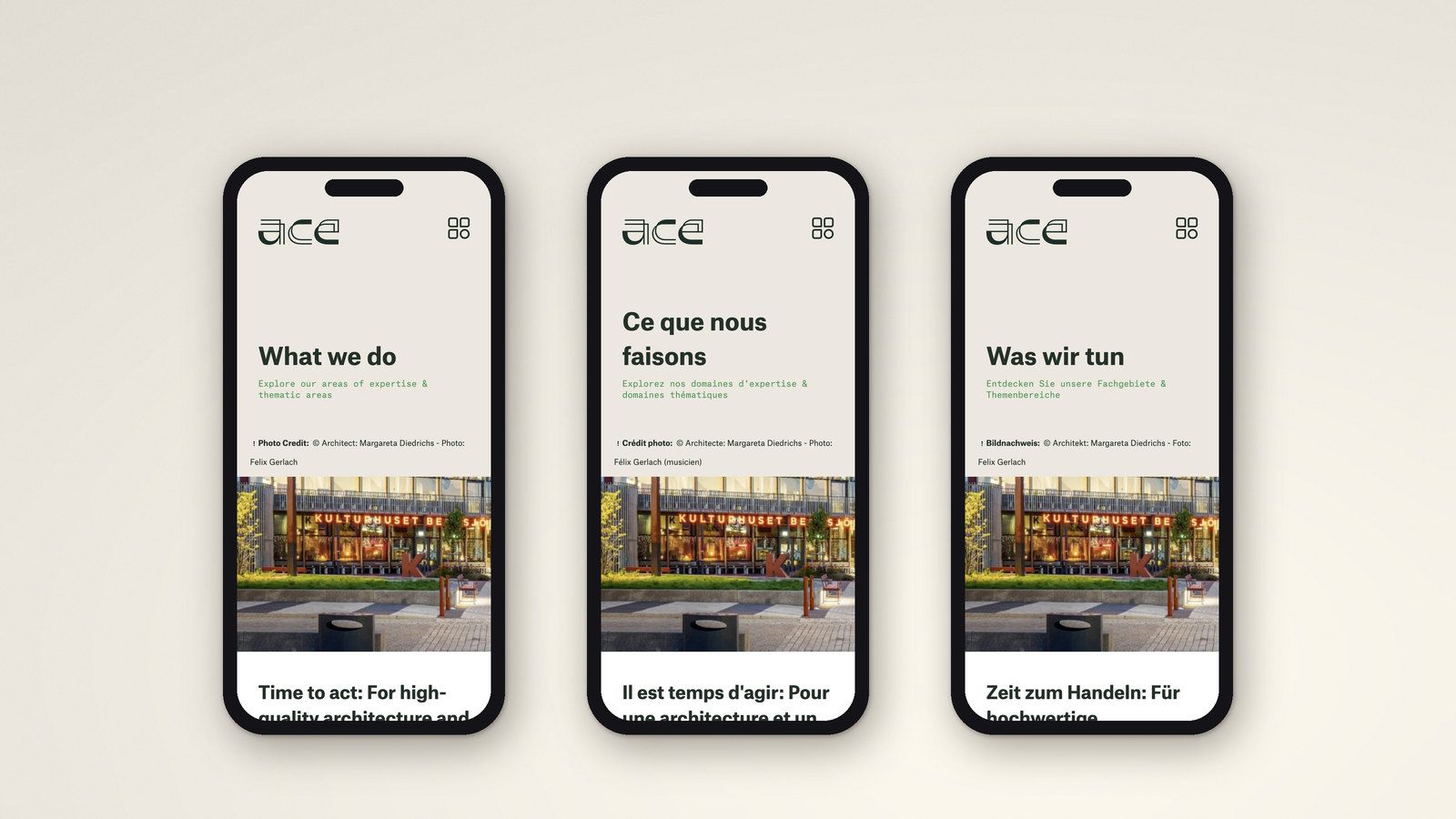
08The delivered website integrates the European Commission’s eTranslation service, giving visitors a choice of automatic translations.
Its website is a primary channel for communicating with member organisations, European institutions and the public. It also holds information that individual architects and researchers need in practice.
- 5priorities set out in the 2022 tender: search, design and user experience, information architecture, navigation, and inclusion through languages
- 1shared entry point for country information, sector research, publications and architectural policies: the Databank
- 2024the new website launched in December; our work continues through hosting, maintenance and further development
How we got there
In this case study
development and migration
replacing TYPO3
managed by Penrose
European Commission’s eTranslation service
and development
The brief
ACE represents the architectural profession at European level. It promotes architectural quality and a sustainable built environment, supports high standards of qualification, and encourages architects and architectural services to work across borders.
Its website is a primary channel for communicating with member organisations, European institutions and the public. It also holds information that individual architects and researchers need in practice. An architect may be exploring work in another country; a policy officer may need ACE’s position on public procurement.
The 2022 tender set out five priorities: search, design and user experience, information architecture, navigation, and inclusion through languages. ACE wanted to simplify and extend how it interacted with its members and the public.
A new visual identity and typeface had already been developed. The website needed to carry that connected system into a digital experience while reorganising the information behind it.
We had previously worked with ACE on graphic design for BUSGoCircular and TripleA-reno. The website extended that relationship into research, design, development and ongoing support.
Understanding the organisation and its audiences
We began with stakeholder focus groups and workshops, working through the needs of the organisation and the people using its website.
Our approach put the structure and user journeys before the visual design. Working through those decisions with ACE gave the team a way to review how the website would function before moving into interface design and development.
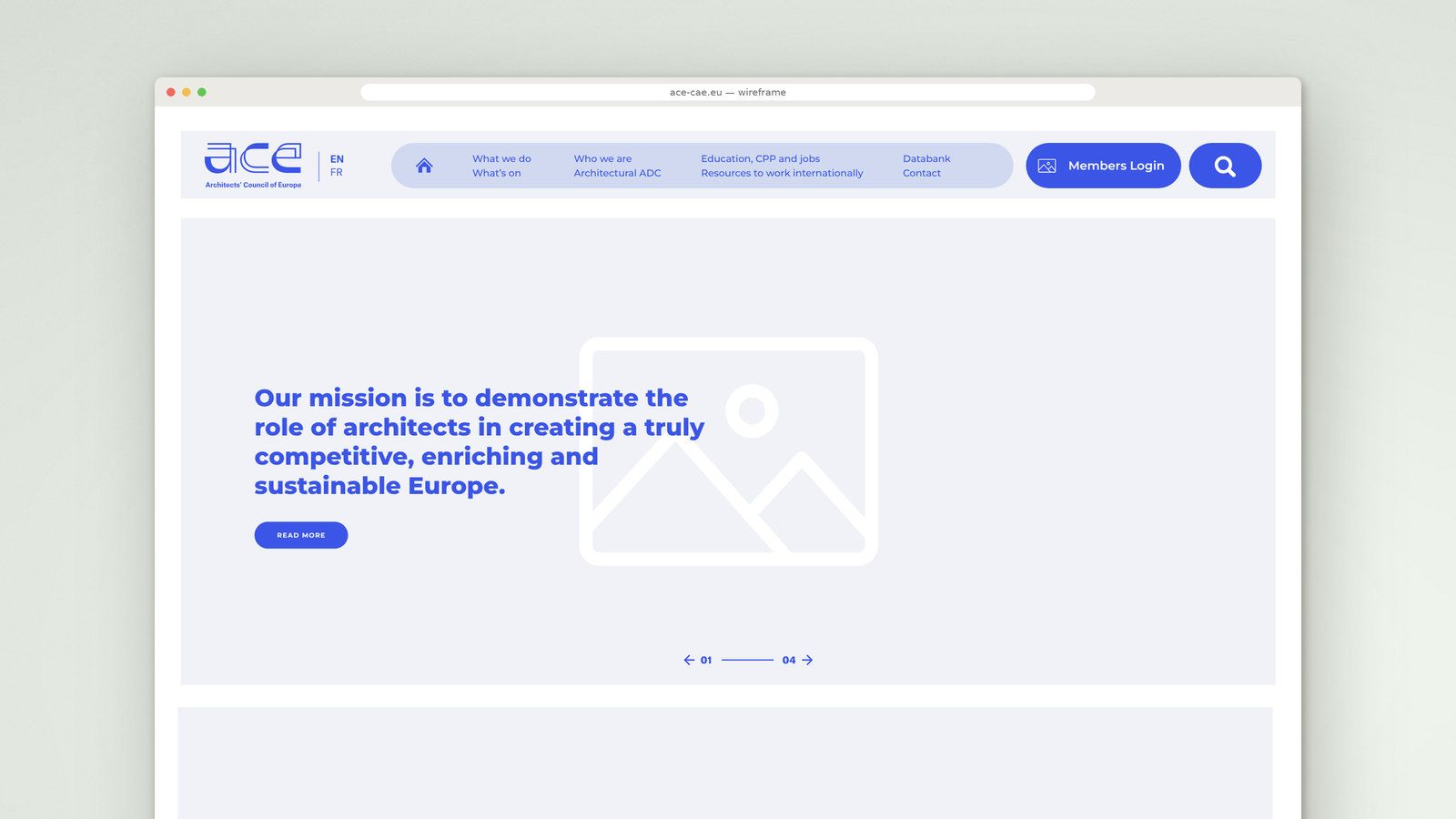
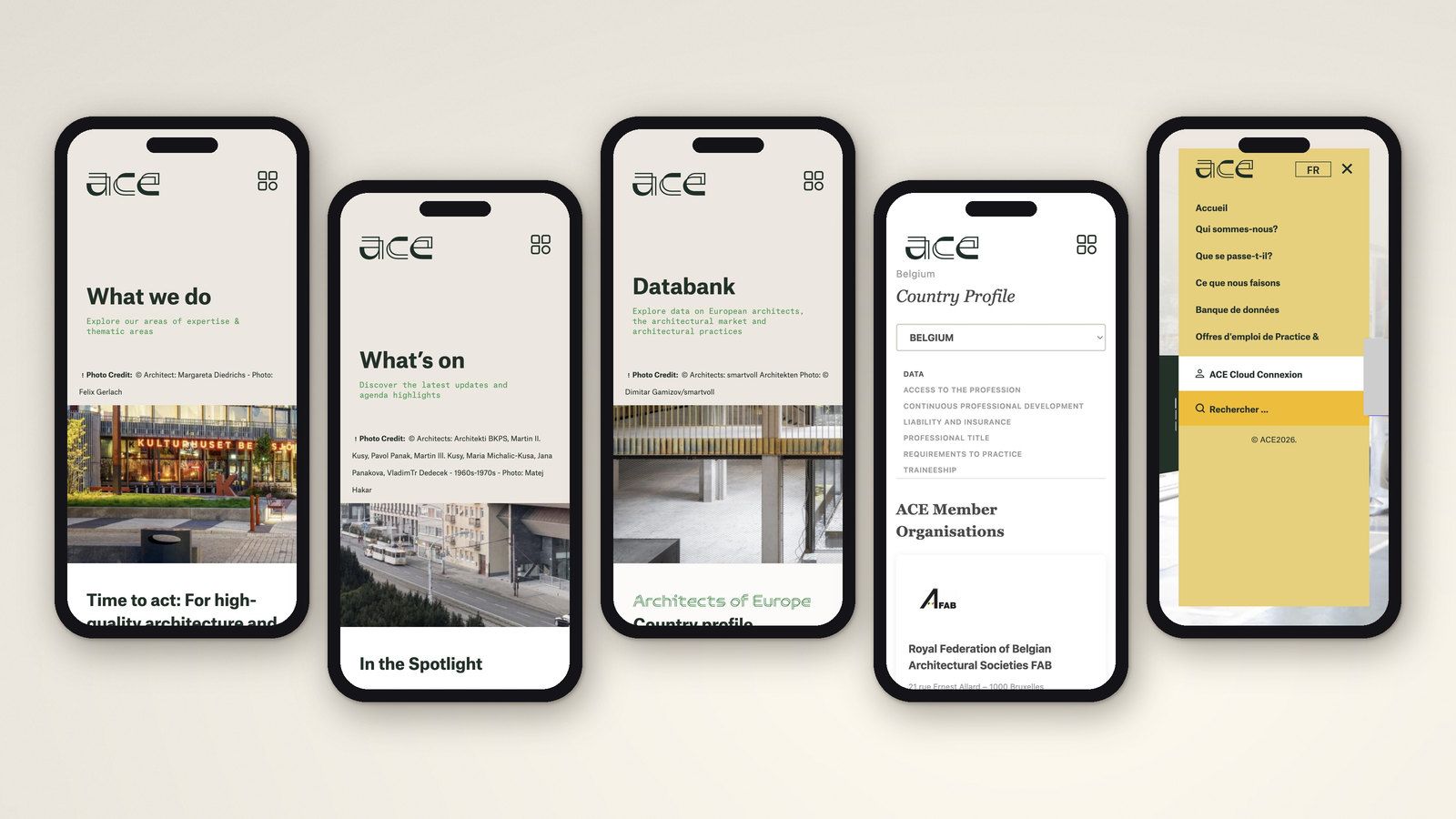
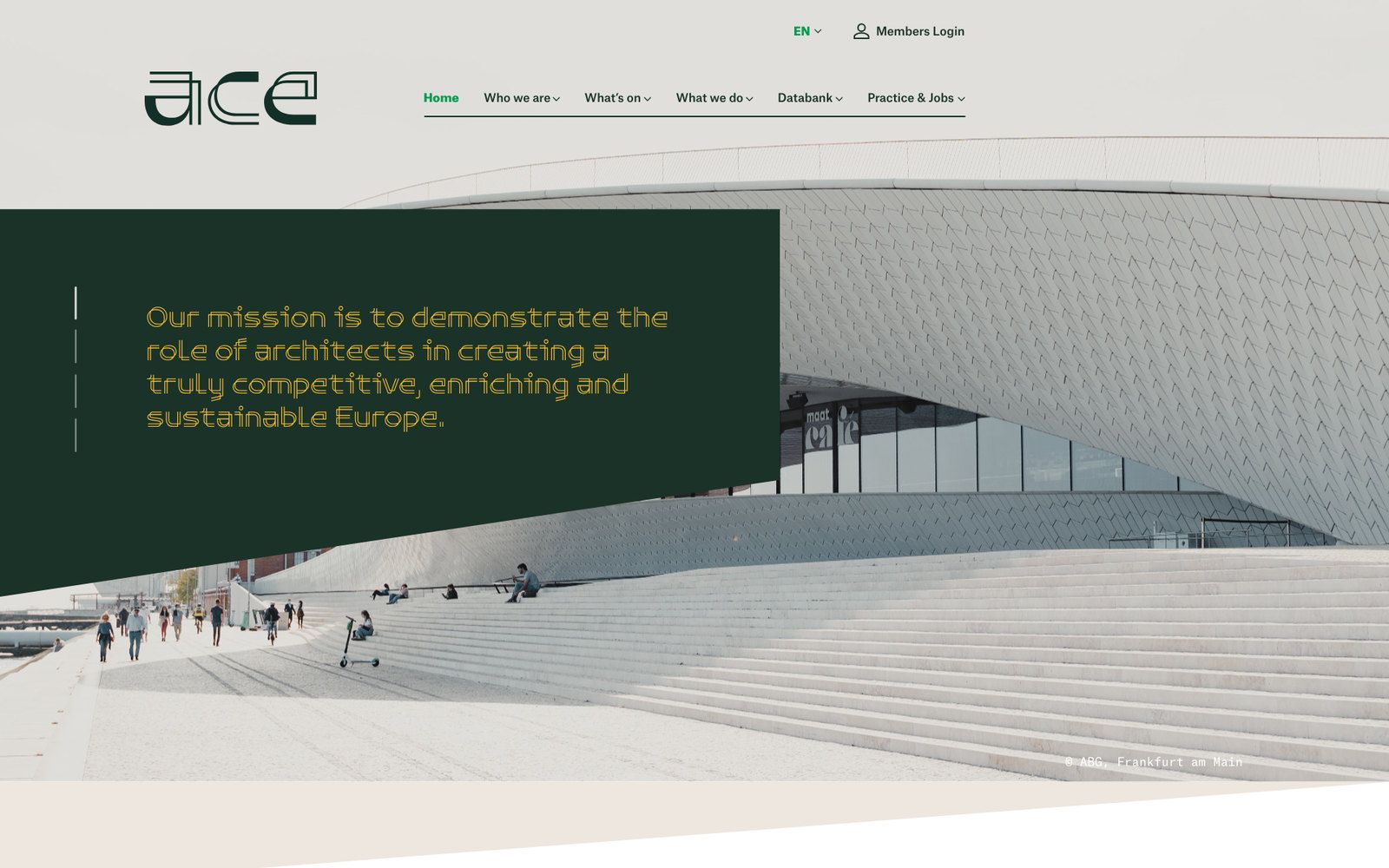
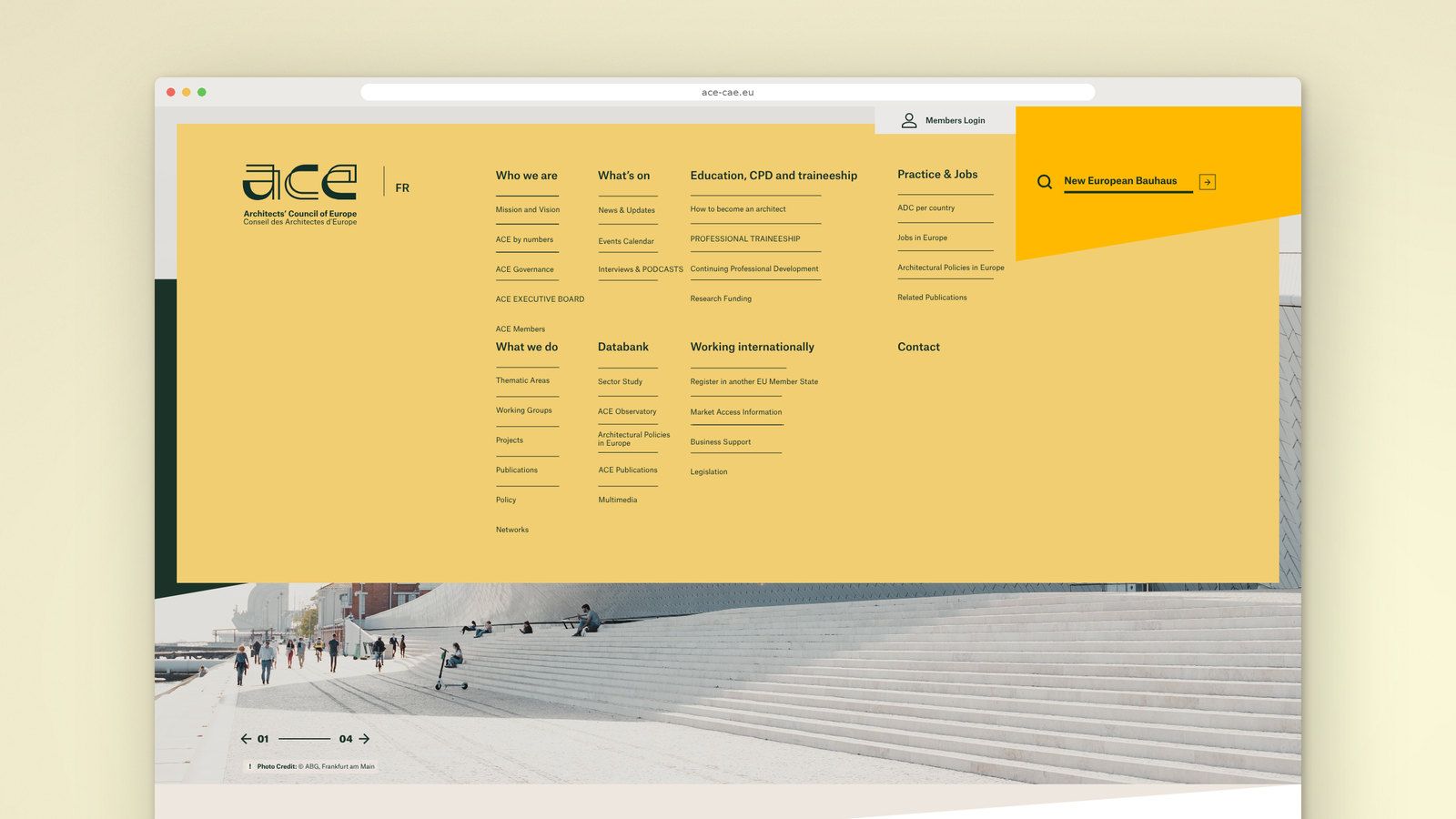
The resulting navigation separated ACE’s institutional role, current activities, policy work, professional resources and sector knowledge: Who we are, What’s on, What we do, Databank, and Practice & jobs.
Each area provides a starting point for a different kind of question. Visitors can explore ACE’s position on an issue, find information about a country, or look for an event without first having to understand the organisation’s working structure.
Giving the content a useful structure
Connecting policy with the work behind it
The What we do area introduces ACE’s thematic priorities and work groups, then provides routes into policy positions and EU-funded projects.
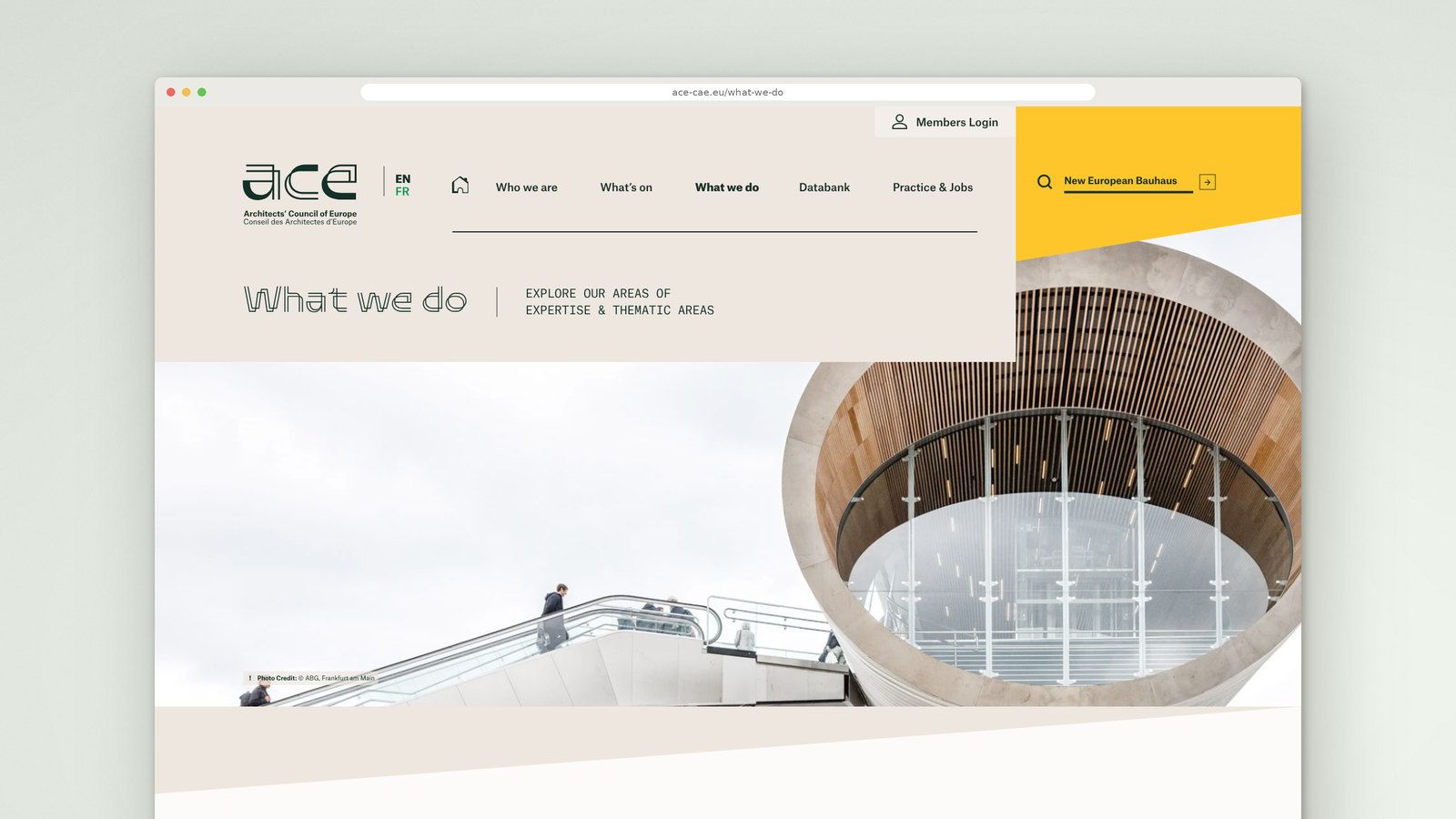
That creates different levels of detail. A visitor can start with an overview of an area such as access to the profession, then explore the groups and material associated with it.
Policy listings provide filters including topic, thematic scope and date. Someone researching a subject such as housing or public procurement can narrow the material to their area of interest.
Moving from a European overview to national information
The Databank gives country information, sector research, publications and architectural policies a shared entry point.
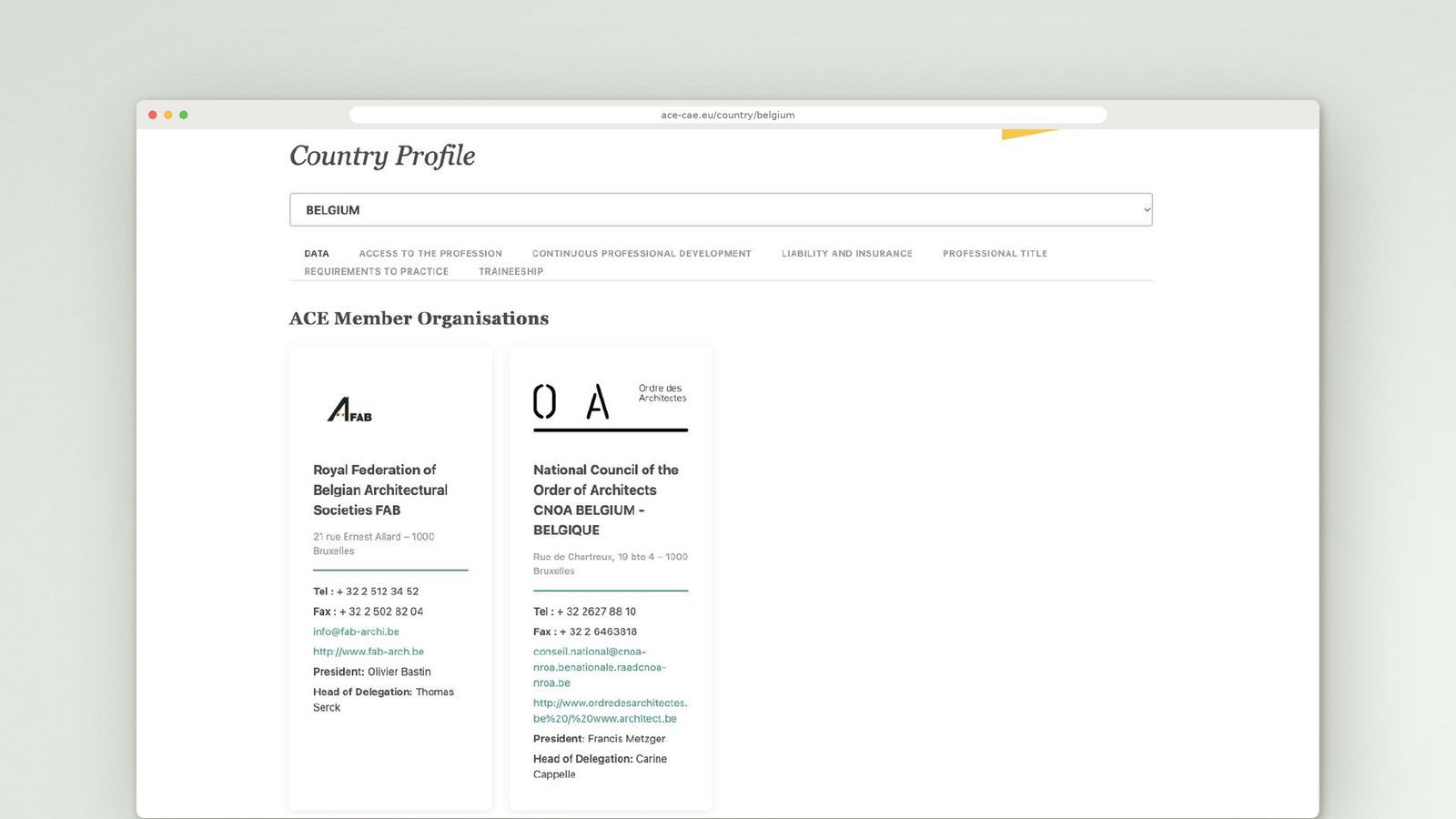
Country profiles connect that European view with national detail. The Belgium profile, for example, brings member organisation details together with sections on access to the profession, continuing professional development, liability and insurance, professional titles, practice requirements and traineeships.
For an architect exploring work across borders, a country provides a familiar place to begin. For someone studying the profession, the same structure offers a consistent way into national information.
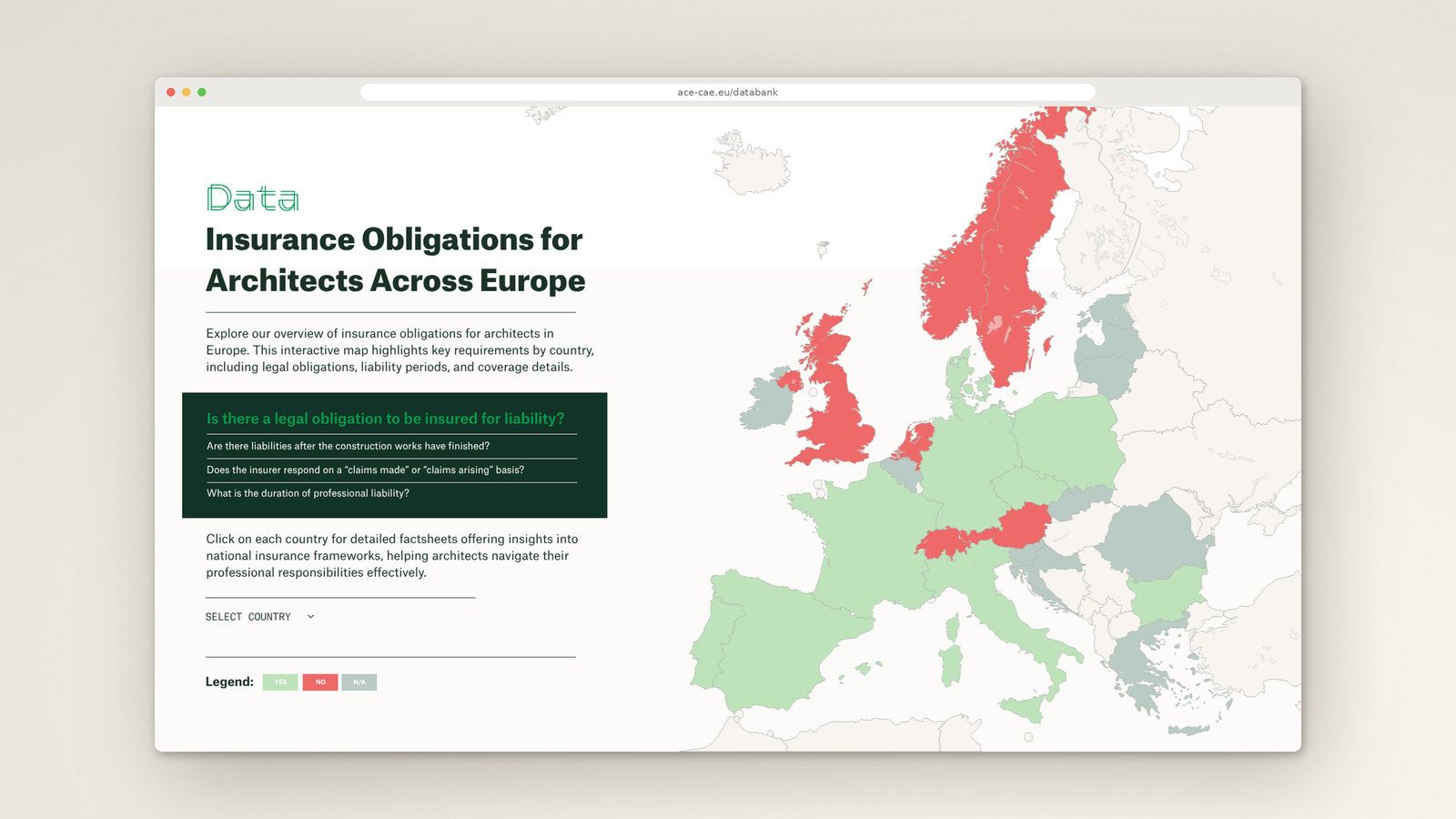
The geographic approach was present in the original website designs. The country data and visualisation work has continued to develop since launch.
Giving different kinds of updates their place
What’s on brings together news, events, interviews and podcasts. The design distinguishes those formats while keeping them within a common system.
An event needs its date and location to be visible. An interview needs to identify the conversation and give people a reason to read or listen. Designing around those differences helped establish templates for ACE’s regular communications.
Translating the identity into an interface
ACE supplied an existing visual identity and custom typeface. The brief described an interconnected system, from the logo and typeface to the grid, graphics and visual language.
Our role was to make that system work through navigation, page layouts, content cards, filters and reusable components.
The initial design proposal gave search a prominent yellow panel beside the main navigation. An expanded state showed suggested results with content labels and dates. Search was treated as a principal route into the website from the outset.
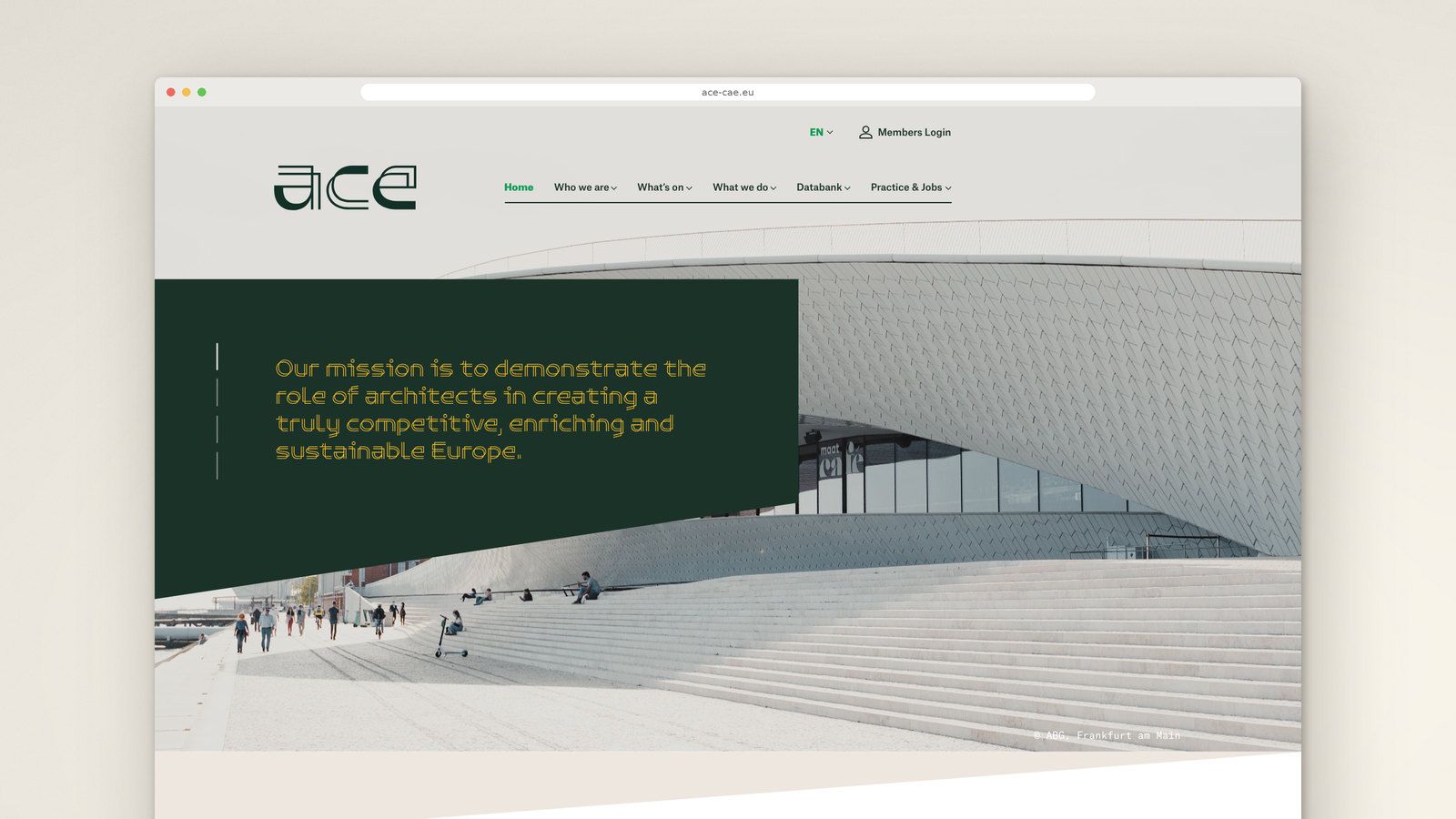
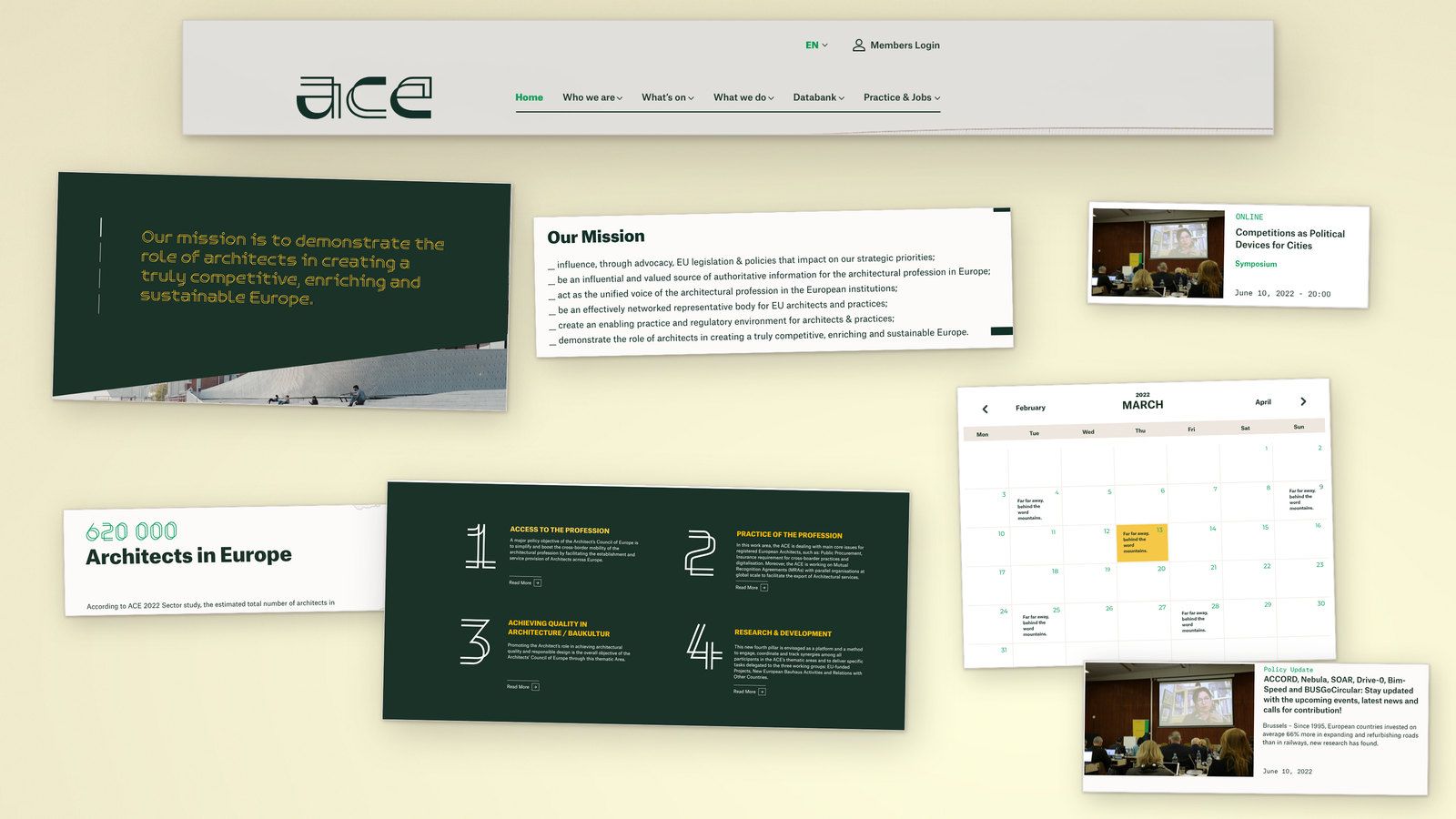
Architectural photography, the custom display type and angled panels carried the identity into the page compositions. The article design paired a large photographic opening with a quieter reading layout, followed by related material.
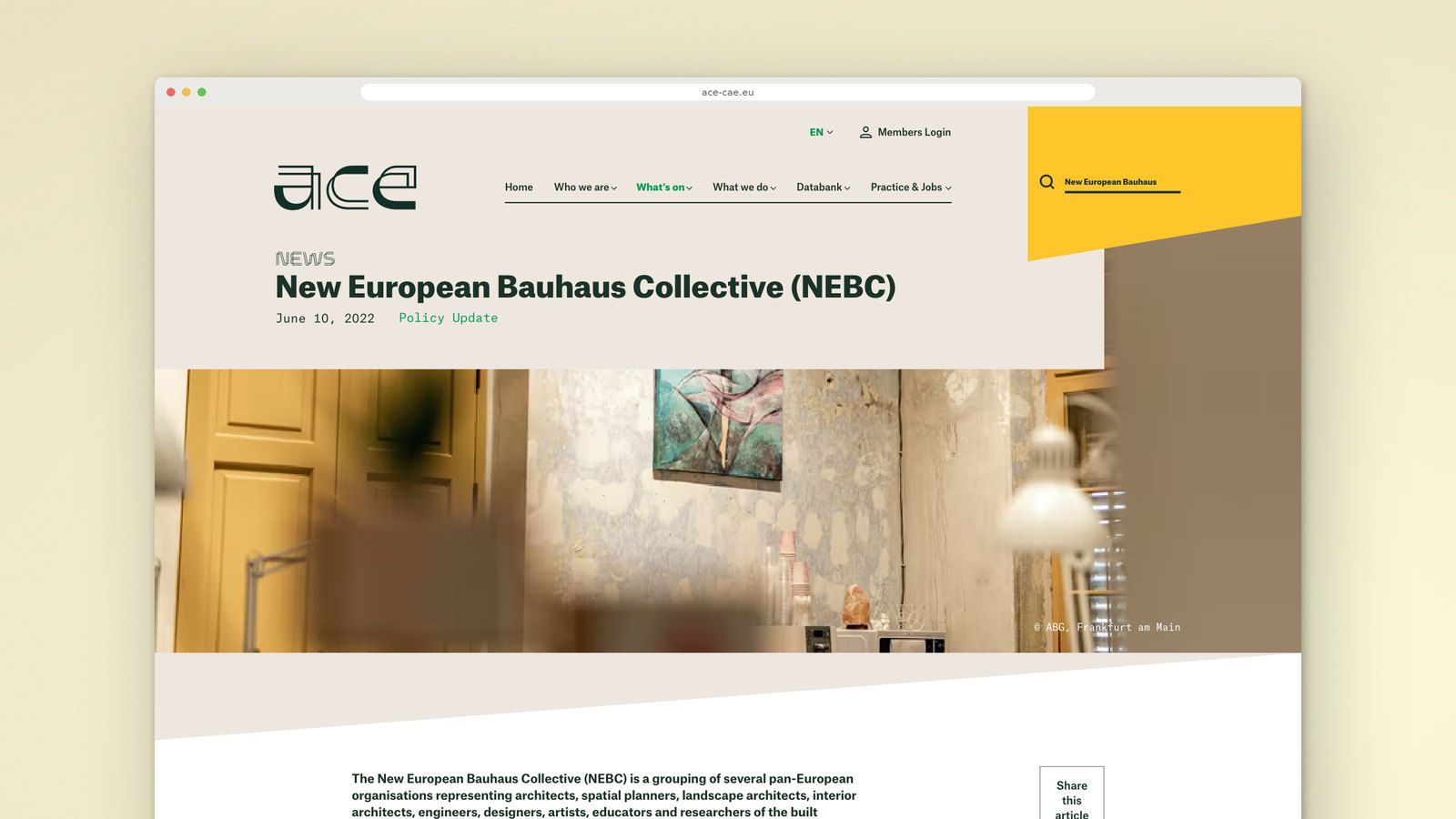
As the designs developed with ACE, the reviews pushed towards simpler compositions: more space around work groups, fewer decorative elements and more consistent headings. That refinement helped the identity accommodate detailed institutional content as well as prominent statements and imagery.
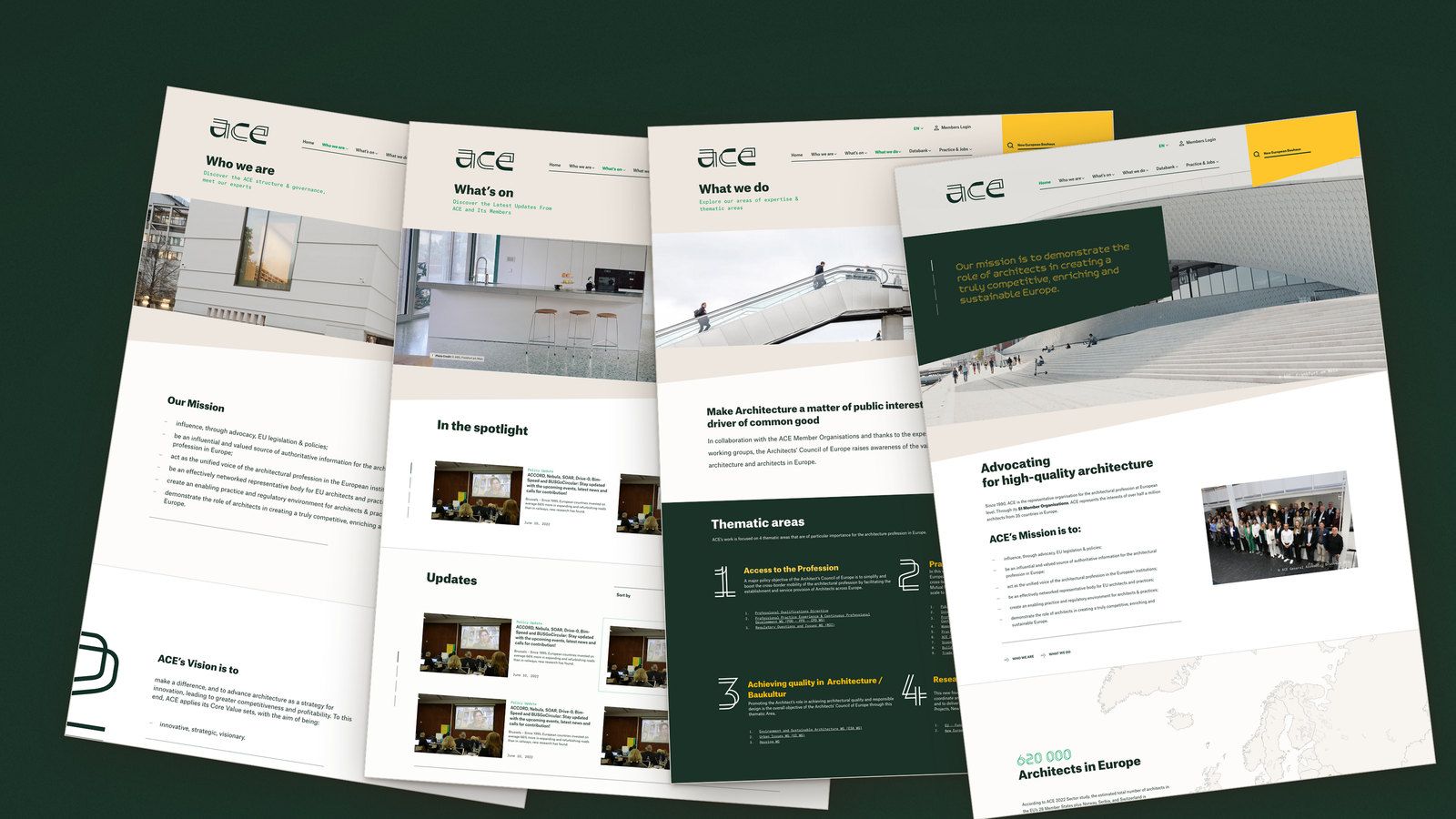
Rebuilding the publishing platform
Choosing a platform ACE could continue to develop
We proposed WordPress with long-term maintenance and handover in mind. Open source technologies and familiar development tools would give ACE access to a wider pool of developers as its needs evolved.
We migrated the website from TYPO3 to WordPress, adapting the existing content to the new structure. Migration had been identified as a risk at the tender stage: before access to the legacy system, the condition of its database and the work needed to transfer it were still unknown.
The public website
The members’ workspace
The work involved mapping legacy material into the new content model and planning redirects for changed addresses. This connected the information architecture with the articles, documents and pages ACE already held.
We built the publishing experience around WordPress and reusable Gutenberg components, allowing editors to assemble pages within the website’s design system.
Connecting public communication and member collaboration
The original scope also addressed the members’ area, for which we proposed a separate document and collaboration platform. Alongside the public website, ACE launched the ACE Cloud workspace for workgroup members and delegates.
The programme therefore addressed both public access to ACE’s work and the needs of the people contributing to it. The members’ workspace provided a dedicated place for that collaboration alongside the public website.
Making the website available across languages
ACE’s commitment to cross-border cooperation made language access an important part of the brief. Its members work in different national and linguistic contexts, while its policy and professional information serves a European audience.
Our original proposal included multilingual publishing. The delivered website integrates the European Commission’s eTranslation service, giving visitors a choice of automatic translations.
The interface identifies these as machine translations and makes clear that the English original remains the official version. This gives readers access to translated material while retaining a clear reference for detailed professional and policy content.
Sustainable hosting and ongoing care
Connecting the infrastructure with ACE’s purpose
We host the website on a virtual private server (VPS) at Leafcloud, managed by Penrose. Sustainability informed that choice from the original proposal.
Leafcloud’s infrastructure model combines renewable electricity with the reuse of server heat to provide hot water in buildings. The energy used for computing can also serve a heating need.
For an organisation advocating a sustainable built environment, this gave the hosting decision a particular relevance. The infrastructure supporting ACE’s communications could reflect the same concern for how energy and buildings are used.
Maintaining and developing the platform
Since the December 2024 launch, we have continued to provide hosting, maintenance and support, alongside further improvements.
Planning for the website’s working life was part of the original offer. The tender considered total cost of ownership, and our proposal addressed hosting, updates, security, backups and future development alongside the build.
In 2026, our work included an Algolia search upgrade with predictive suggestions and tolerance for spelling errors. We also redesigned and rebuilt the events area and homepage calendar, including the ability to add events to a personal calendar.
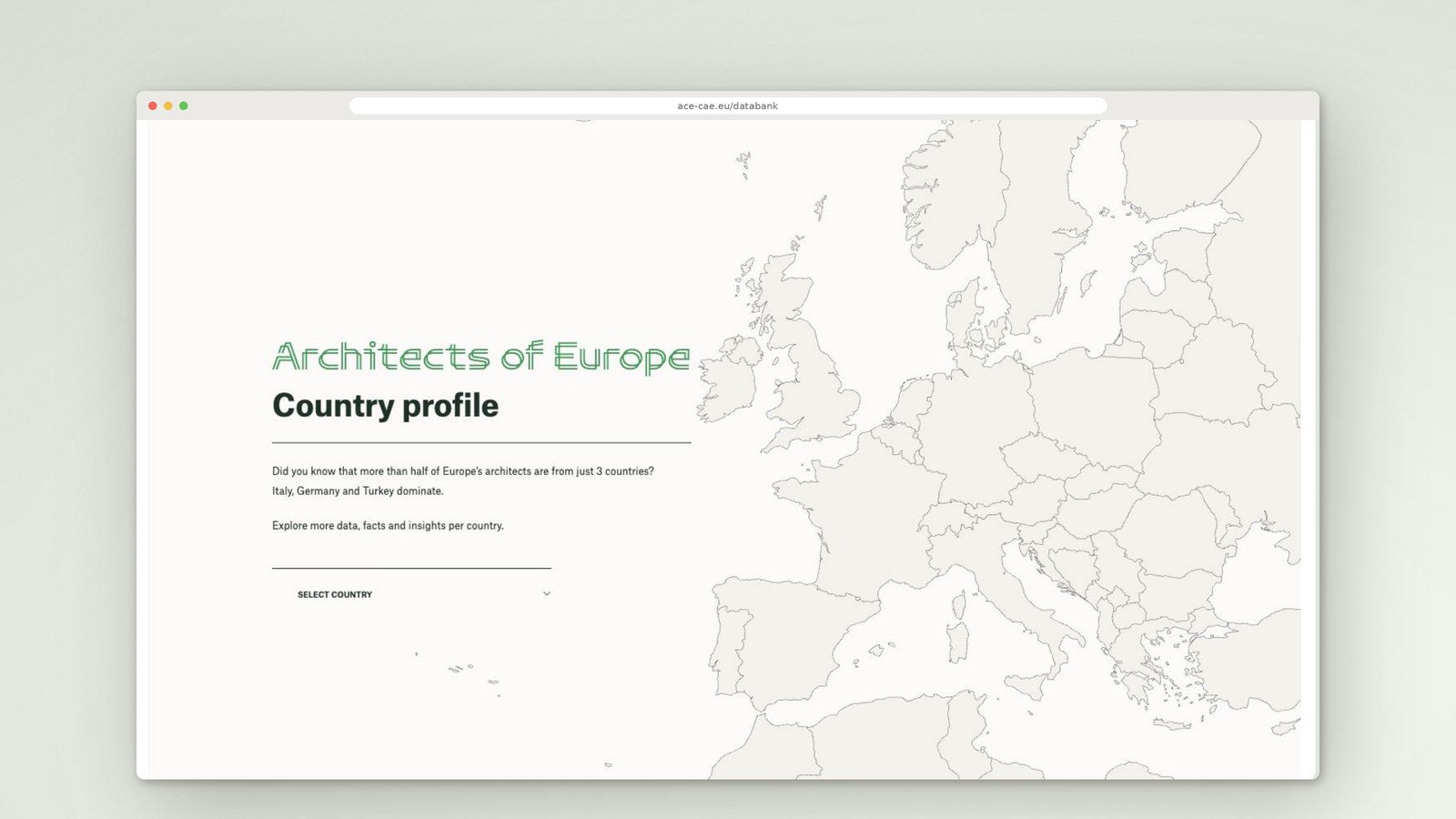
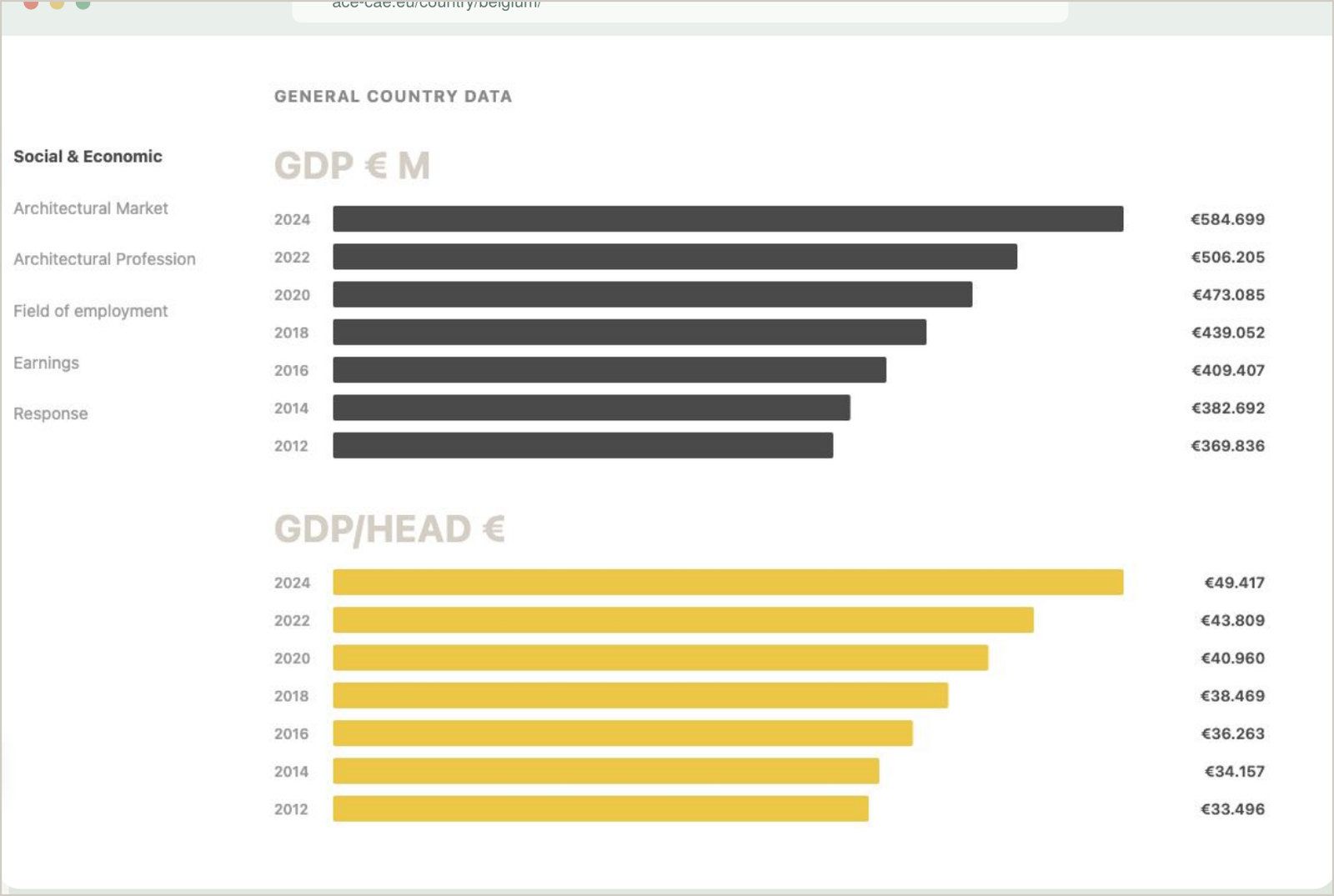
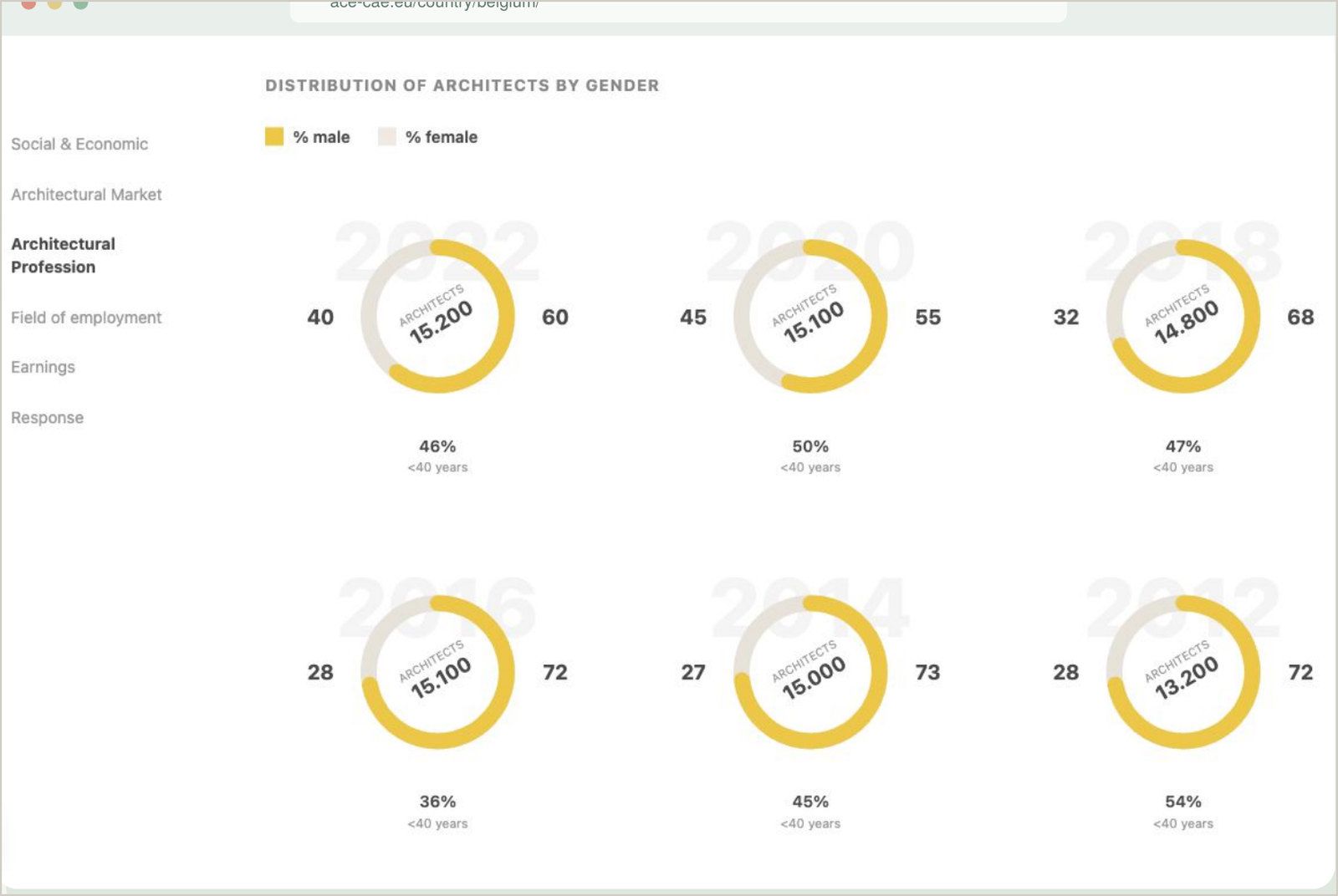
The Databank has been another area of continued work, extending how sector information is presented within the website. These improvements build on the structure and publishing platform established during the redesign.
The outcome
ACE gained a WordPress website that brings its institutional role, policy activity, professional information and sector knowledge into a common structure, with reusable publishing components and automatic translation.
Visitors can approach the content through a subject, a country, a publication or a current activity. The accompanying members’ workspace supports collaboration among the people contributing to ACE’s work.
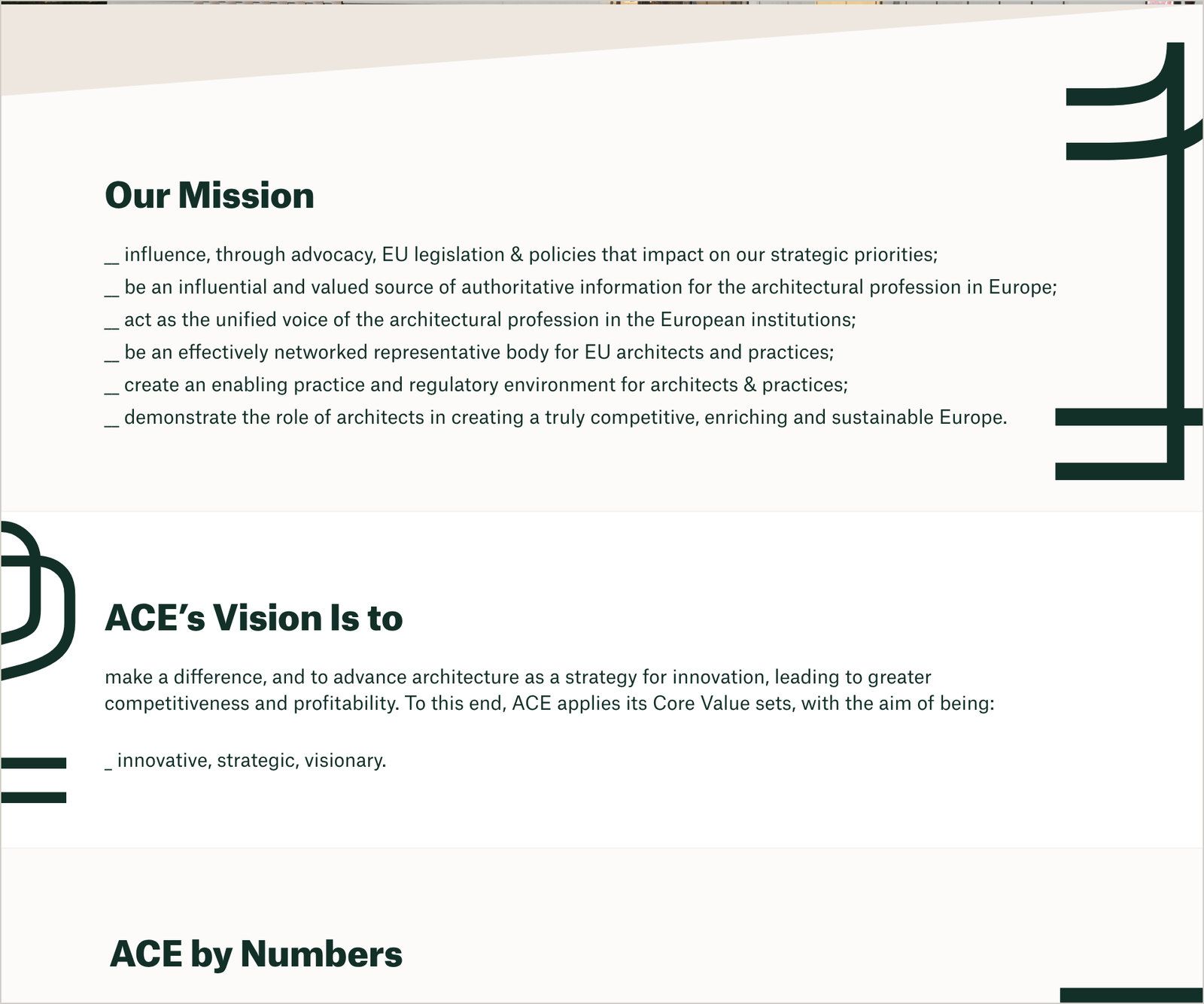
In its account of the launch, ACE highlighted the same priorities set out in the tender: search, user experience, information architecture, navigation and multilingual access. Its annual report credits Penrose with the website’s development and records the eTranslation integration.
Our relationship with ACE has continued beyond that launch, with search, events and country information developing as the organisation’s needs evolve.
Penrose
 Sorin PavelSolution architecture and UX
 Elena ReghintovschiUI and graphic design
 Cristi LunguDevelopment
 Bogdan PârvulescuDevelopment
Stakeholder research and workshops, information architecture, UX and UI design, WordPress development, TYPO3 migration, multilingual integration, hosting, maintenance and further development. The wider programme also included the ACE Cloud members’ workspace. The ACE team contributed organisational knowledge, content and feedback throughout the project. Existing identity and custom typeface supplied by ACE. Digital implementation by Penrose.